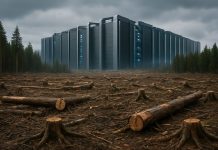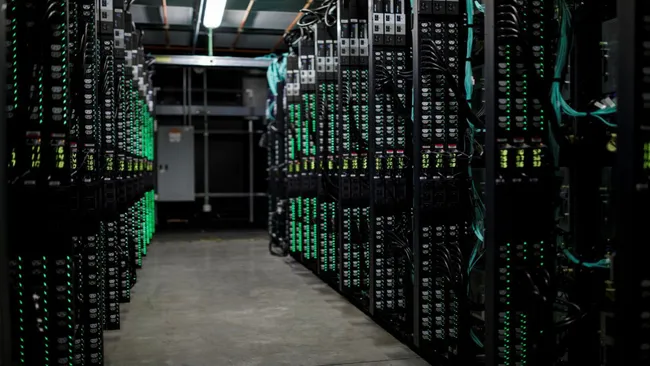
Amazon Web Services (AWS) has announced it will stop signing non-disclosure agreements (NDAs) with government agencies concerning new data center projects. This decision comes in response to escalating public opposition to the construction of data processing centers.
Rising Protests Against Data Centers
Matt Garman, CEO of AWS, attempted to address public concerns and highlight the potential benefits of data centers for local communities in an official blog post. However, confidentiality agreements have emerged as a significant point of contention in the public’s resistance to new facility developments.
Environmental activist Erin Brockovich pointed out that a primary criticism leveled against data centers by the public revolves around a lack of transparency. She described a common pattern: projects receive approval before local residents are aware, developers disregard citizen concerns, and officials sign NDAs without informing residents.
This public pressure has already yielded results. The state of New York has paused the review of applications for large data center construction for one year. According to Garman, over 100 such proposals are currently under consideration in various U.S. states.
Concerns Over Future AI Development
Garman expressed concern that such restrictions could put the United States at a disadvantage in the global race for AI computing power, with consequences that could be felt for generations.
Debunking Data Center Myths
Garman also sought to refute four common myths associated with data centers:
- Excessive Water Consumption: According to Amazon, data centers directly consume only 0.5% of total industrial water usage in the U.S., significantly less than golf courses or almond production. Critics, however, note that these figures do not account for water used in electricity generation or chip manufacturing. Currently, there are no legal requirements for technology companies to report their water and energy consumption.
- Rising Electricity Prices: Garman claims that price increases are observed only in specific states with a high concentration of data centers, while prices in other regions are either decreasing or rising negligibly. He also emphasized that in some instances, outdated power grid infrastructure, which needed modernization before the emergence of new power demands, is the cause of price hikes. However, independent observations indicate that data centers themselves have been the primary driver of a 76% increase in electricity prices in the largest U.S. power system.
- Significant Pollutant Emissions: Garman noted that critics often refer to the maximum permissible emission levels stated in permit documents. For example, a planned AWS data center in Texas had a permit for annual CO2 emissions of up to 33 million tons, exceeding the output of any power plant in the U.S. He stated, however, that data center backup generators are rarely used, remaining on standby 99.9% of the time and only activating for mandatory testing.
- Lack of Community Benefit: In response to this, Garman stated that AWS has already ceased signing NDAs with governments and has invested over $1 billion in communities hosting its data centers over the past three years.
A Crisis of Trust
Despite these statements, whether AWS can win over public opinion remains uncertain. Dario Amodei, CEO of Anthropic, believes the current resistance to AI and related technologies is fundamentally a crisis of trust, with people often feeling that governments and tech companies are acting against their interests.
It appears that the assurances from tech giants have yet to convince skeptical residents, who often respond to company explanations with disbelief.
Source: ithome.com