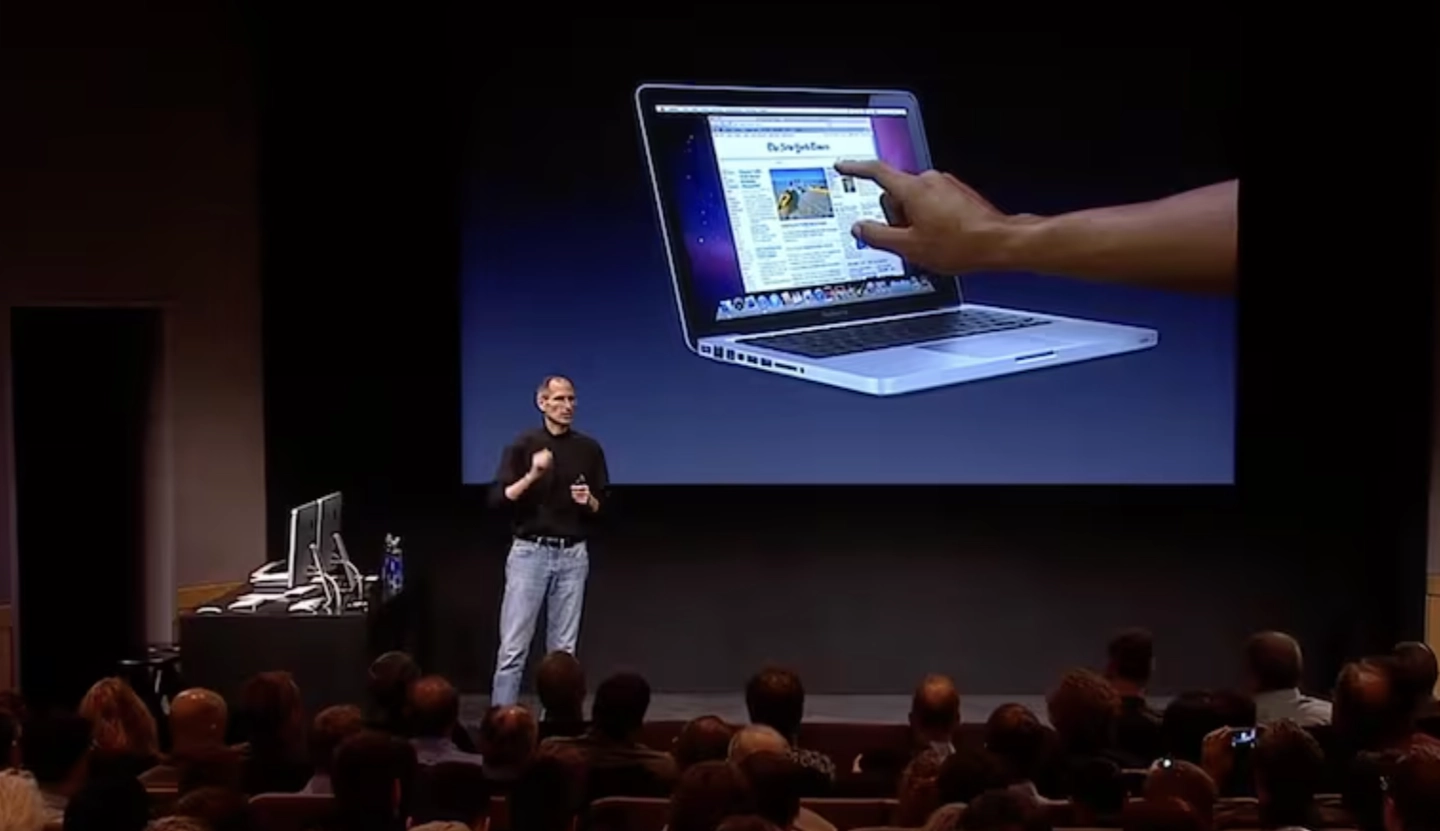
Apple is set to unveil its first-ever MacBook Pro with a touchscreen on October 29th, Beijing time, according to a report by Bloomberg journalist Mark Gurman. This highly anticipated release marks a significant shift in Apple’s product strategy, introducing touch capabilities to the Mac lineup alongside an OLED display and a refreshed user interface.
A Shift from Past Stances
For years, Apple executives have historically downplayed or outright dismissed the idea of touchscreen laptops. Figures like Steve Jobs famously described them as ergonomically flawed, and Tim Cook once likened the convergence of tablets and PCs to combining a toaster and a refrigerator. Even former marketing chief Phil Schiller and software head Craig Federighi had previously expressed negative views on touch-enabled Macs. The upcoming launch, under the leadership of current CEO John Ternus, signifies a notable departure from these previous positions.
Introducing Touch and OLED to MacBooks
The new MacBook Pro models, expected to be available in 14-inch and 16-inch sizes, will closely resemble the current designs but will feature a lighter chassis and the introduction of OLED screens. Notably, they will also incorporate the familiar ‘Dynamic Island’ interface, a feature currently exclusive to iPhones. While the exact pricing is not yet confirmed, it is anticipated that these new models will command a premium price significantly higher than the current starting price of $2,499 for high-end MacBook Pros.
Bridging the Gap Between Mac and iPad
Apple has long maintained a clear distinction between its Mac and iPad product lines, emphasizing their different ergonomic designs and operating systems. This strategy not only highlighted their unique strengths but also encouraged users to purchase both devices. However, with the iPad progressively gaining more robust multitasking capabilities and iPadOS incorporating more desktop-like features, this product segmentation has faced increasing scrutiny.
The introduction of a touchscreen on the MacBook Pro suggests Apple believes it will not cannibalize iPad sales. Instead, it may attract new users and encourage consumers to own both a Mac and an iPad. The company is likely to continue differentiating the two lines through factors such as weight, portability, primary input methods, and the depth of their respective operating systems. iPads will likely remain the choice for lightweight, touch-centric mobile use, while MacBooks will continue to cater to complex tasks requiring a built-in keyboard and a full desktop OS.
A Compromise in Design
Both Tim Cook and John Ternus reportedly believe consumers are ready for touch interaction on Macs. However, the industrial design team still had reservations. The resulting compromise is a device where touch is an optional input method, rather than a core element that redefines the Mac’s design. This acknowledges that traditional laptop ergonomics can be challenging for touchscreen use, potentially causing arm fatigue during extended sessions. Therefore, this strategic shift appears to be driven more by market demand and commercial considerations than by a complete resolution of touchscreen laptop usability issues.
Software Adaptations for Touch
To support the new interaction model, Apple has made adjustments to the macOS 27 Golden Gate interface. The system will dynamically display relevant controls based on whether the user is interacting via touch or trackpad. For instance, menus might appear closer to the user’s finger after a tap, and the Dock and menu bar will be optimized for touch input, enabling a more fluid transition between touch and traditional pointer-based navigation.
OLED and Future Growth
The adoption of OLED screens is another key factor contributing to the expected price increase. Compared to the mini-LED displays in current MacBooks, OLED offers deeper blacks and higher contrast ratios but comes with increased manufacturing costs. This move allows Apple to position these new MacBooks as a more premium offering and potentially boost the average selling price of its Mac line, mirroring the strategy used when introducing Retina displays with the MacBook Pro in 2012.
While touchscreen laptops are still a niche in the broader PC market, with brands like Lenovo, Dell, and HP having offered them for over a decade, they currently represent only about 20-25% of global laptop shipments. For most users, keyboards and trackpads remain the primary and most natural input methods. Touch functionality is often relegated to tasks like scrolling, zooming, and direct content manipulation, rather than being essential for daily productivity.
Learning from Past Innovations
The integration of a touchscreen on the MacBook Pro might draw parallels to Apple’s previous ‘Touch Bar’ innovation. While initially promoted as a key feature, the Touch Bar ultimately replaced familiar physical keys and did not achieve long-term adoption. The touchscreen, however, differs in that it adds an optional input method rather than replacing existing core functionalities. This makes it more likely to remain a permanent fixture in the Mac lineup, even if it doesn’t dramatically boost sales.
Filling Product Line Gaps
This new MacBook Pro also continues Apple’s recent trend of filling perceived gaps in its product lineup. Earlier this year, the company introduced the MacBook Neo, entering the previously cautious lower-priced laptop market. This month also saw the launch of its first smart home display device, HomeView, and the availability of the iPhone Duo, its first foldable smartphone. These releases indicate a re-evaluation of Apple’s historically conservative approach to certain product categories.
It is noteworthy that HomeView, iPhone Duo, and the touchscreen MacBook Pro are all debuting within the initial weeks of John Ternus’s tenure as CEO, although their development undoubtedly began during Tim Cook’s leadership. This series of product launches suggests a growing flexibility within Apple, a willingness to adapt its product strategy based on market demands rather than rigidly adhering to past doctrines.