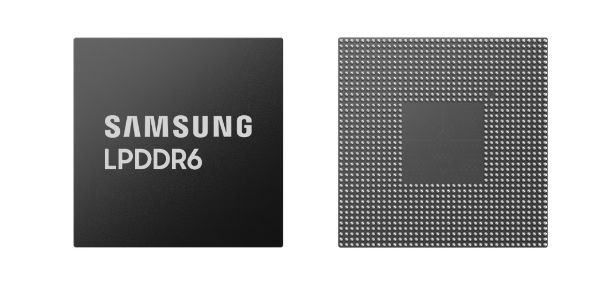
Apple has reportedly agreed to Samsung Electronics’ pricing for memory chips in the first quarter of 2027, signaling a significant cost increase for the tech giant. Sources indicate that DRAM prices will hover around $2.0 per Gb, while NAND flash memory will be priced at approximately $0.33 per Gb. This represents a substantial jump of 30% to 40% compared to the prices agreed upon for the third quarter of 2026.
Context of Rising Memory Costs
To provide perspective, Samsung’s quoted prices for Q3 2026 were around $1.4 per Gb for LPDDR4X, $1.5 per Gb for LPDDR5X, and $0.26 per Gb for NAND. While actual transaction prices in Q3 2026 were only 1% to 2% higher than quoted, they were still considerably lower than market expectations. In contrast, server DRAM prices saw an increase of over 20% during the same period, highlighting a widening price gap between consumer and enterprise-grade memory solutions.
Supply Chain Dynamics and Capacity Constraints
Industry insights from CGS-CIMB suggest that major memory manufacturers, including Samsung, SK Hynix, and Micron, have already allocated most of their DRAM and HBM production capacity through the first quarter of 2027. NAND capacity is also expected to be fully committed by the end of August. Consequently, customers are likely to receive only 60% to 70% of their requested quotas. Large cloud service providers and AI companies are securing the majority of this limited supply through long-term agreements.
Shifting Production Towards High-Bandwidth Memory (HBM) and Servers
The demand side for smartphone storage continues to contract. Facing rising costs, smartphone manufacturers have significantly slowed down their procurement pace for Q3 and Q4. Companies like OPPO and vivo have reportedly rejected Samsung’s Q3 pricing offers. In response, major manufacturers such as Samsung, SK Hynix, and Kioxia are reducing production of consumer-grade memory, redirecting their capacity towards the more lucrative server and HBM markets.
Data from Omdia reveals a planned reduction in NAND wafer output for 2026. Samsung Electronics aims to decrease its output from 4.9 million pieces in 2025 to 4.68 million pieces in 2026. SK Hynix plans a reduction from approximately 1.9 million to 1.7 million pieces, while Kioxia is adjusting its production from 4.8 million to 4.69 million pieces.
Impact on Apple’s iPhone Pricing
The increasing cost of memory is having a direct impact on device pricing. TrendForce estimates that the storage cost for the 256GB version of the iPhone 18 Pro in Q3 2026 has surged by nearly 400% year-over-year. This has pushed the proportion of storage cost in the overall bill of materials for the device from about 10% a year ago to 34%.
Apple itself has acknowledged the unprecedented rise in component prices. In its financial reports, the company stated it has “never seen component prices rise with such magnitude and speed.” This has already led to price hikes for Mac and iPad models in June. Following its September 10th event, Apple increased the starting price of the iPhone 18 Pro (China retail) by 1000 yuan to 9999 yuan. Older models like the iPhone Air and iPhone 17 also saw price increases, some by as much as 2300 yuan, with Apple citing industry-wide price hikes in storage chips as the reason.
Potential Strategies for Mitigating Costs
If the projected price increases for early 2027 materialize, smartphone manufacturers may explore alternative strategies to offset these costs. One such strategy could involve increasing the use of refurbished or second-hand storage components. Reports suggest that some manufacturers are already evaluating this option and have begun utilizing used storage in overseas markets.