In an impressive feat of community-driven development, a talented individual known as Daniel has successfully enabled NVIDIA’s DLSS 5 Neural Rendering technology to run on AMD Radeon graphics cards using a custom tool. This development, tracked by IT House, is particularly noteworthy given that DLSS 5 typically imposes a significant performance penalty, even on NVIDIA’s own high-end GPUs.
Bridging the Gap for AMD Users
NVIDIA’s DLSS (Deep Learning Super Sampling) technology, especially its newer Neural Rendering features, is designed to enhance visual fidelity and performance. However, enabling these advanced features often comes at the cost of reduced frame rates. Early tests indicated that even NVIDIA’s top-tier RTX 50 series cards could see performance drops nearing or exceeding 50% when DLSS 5 was active. While NVIDIA continues to work on optimizations, achieving ideal performance has remained a challenge.
The situation is even more pronounced when attempting to run DLSS 5 on non-NVIDIA hardware. Third-party efforts to force this compatibility have historically resulted in more severe performance degradation compared to native implementations. This is where Daniel’s tool, DLSS-NR-on-AMD, enters the picture. It aims to bring the benefits of DLSS 5’s neural rendering to AMD users, supporting at least the Radeon RX 7000 and RX 9000 series GPUs.
Rapid Development and Significant Performance Gains
Initially, Daniel’s tool focused on addressing bugs and minor performance issues, with the overall gaming experience still being suboptimal. However, the developer has recently entered a phase of accelerated development. Recent updates have brought noticeable performance improvements, and the latest iterations have delivered substantial leaps forward.
The Alpha 0.3.3 version, released recently, introduced several new features. These include a graphical installer with a built-in settings editor and new Overlay control options, alongside various bug fixes. Crucially, this version offered a performance uplift of approximately 23% compared to its predecessor, version 0.3.2.
In a remarkable display of rapid progress, Daniel followed up with a major update on the same day, releasing Alpha 0.4.0. This new version boasted an astonishing 42% performance increase over Alpha 0.3.3. When combining the gains from these two consecutive updates, the tool achieved a cumulative performance boost of nearly 74% within a single day.
Real-World Performance Boost
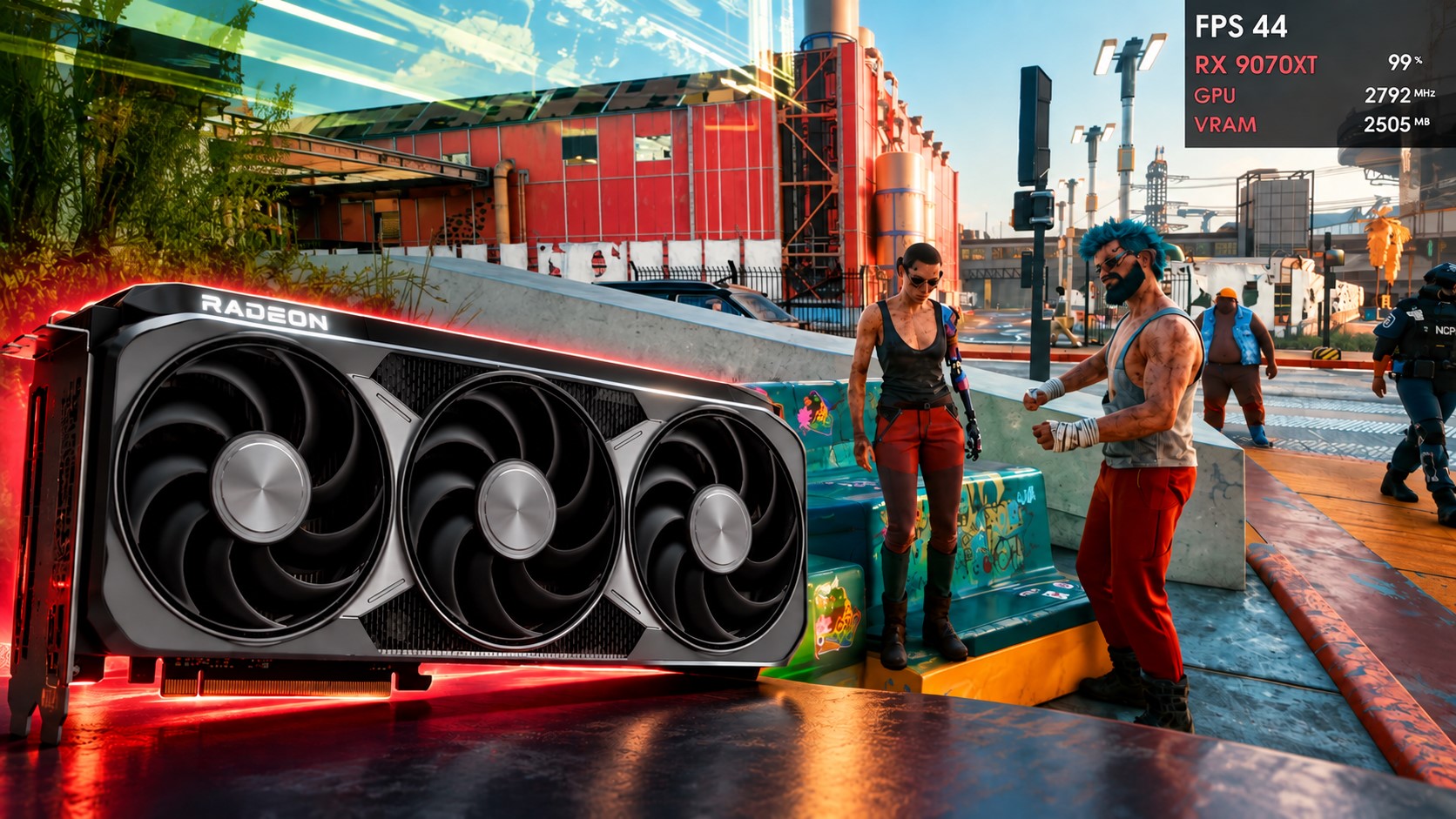
The impact of these improvements has been demonstrated in real-world scenarios. The YouTube channel Ancient Gameplays conducted tests using the Alpha 0.4.0 version. In the demanding game Cyberpunk 2077, running at a resolution of 3440×1440, the GPU achieved a stable 50 FPS. This is a significant improvement from the previous version, where the frame rate barely reached 30 FPS under similar conditions.
Daniel has indicated that further substantial performance enhancements for Radeon cards are expected in upcoming updates, suggesting that the capabilities of this third-party DLSS 5 implementation will continue to grow.
This ongoing work by independent developers highlights the vibrant ecosystem surrounding graphics technology and demonstrates the potential for innovation beyond official vendor support. AMD users now have a compelling reason to explore DLSS 5 integration, thanks to Daniel’s dedication and rapid development cycle.