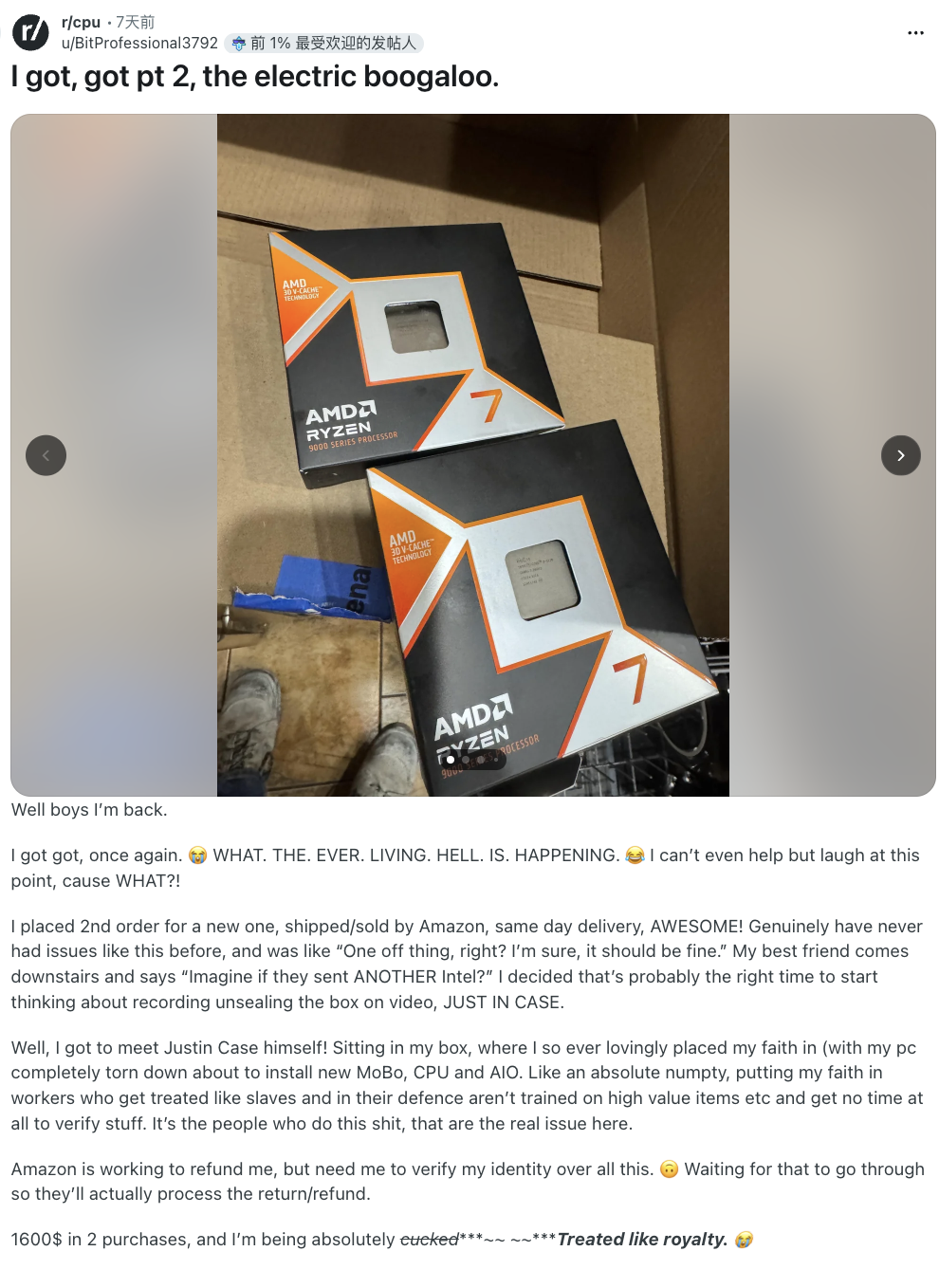
A frustrated overseas customer has reported a bizarre experience on Amazon, receiving the wrong processor not once, but twice. The user, who goes by BitProfessional3792 on Reddit, initially purchased an AMD Ryzen 7 9850X3D processor through Amazon’s official store. However, upon receiving the package, it became apparent that the high-end CPU had been swapped out for a significantly older Intel Core i3-3000 series processor, estimated to be about a decade old.
A Second Chance, Same Outcome
Believing it might have been a case of bad luck, the user decided to give Amazon another chance and placed a second order for the same AMD Ryzen 7 9850X3D. This time, to ensure proof, the entire unboxing process was meticulously recorded on video. Unfortunately, the outcome was identical. Upon opening the package, the user discovered that the processor had once again been swapped. The method of deception was the same, with an Intel Core i3-3000 series processor found inside the box instead of the advertised AMD chip.
Loss of Trust and Alternative Solution
Disillusioned and having lost trust in the online retailer for this specific purchase, the user opted to visit a local Best Buy physical store to buy the processor. The total cost for the two fraudulent orders amounted to approximately $1,600 USD (about 10,737 RMB at the current exchange rate). Amazon is reportedly processing refunds for both transactions.
Speculation on the Cause
The identical nature of the swap in both orders has sparked considerable discussion within the community. Several theories are being considered, pointing towards potential issues within Amazon’s warehousing or logistics operations. Some even speculate that it might be possible for individuals to tamper with packages during the official shipping process.
One notable observation from other netizens was the presence of LPN (License Plate Number) labels on both packaging boxes. These labels are typically used to mark returned items. This has led to the theory that the issue might be related to the process of returned goods being reintroduced into inventory. It’s suggested that someone might be intercepting returned packages, replacing the original contents with different items, and then resealing them to bypass subsequent checks when they are put back on the shelves. Alternatively, the products could have been swapped before being packed or shipped.
Broader Implications
While the exact point of tampering and the responsible party remain unconfirmed, the situation highlights potential vulnerabilities. If the swaps indeed occurred within warehousing or logistics, it indicates serious flaws in these operational procedures. Such issues could extend beyond CPUs, potentially affecting other small, high-value computer hardware like SSDs and RAM modules, which are also susceptible to being replaced.
The possibility of exploitation within Amazon’s internal automated systems is also being considered, though there is currently no definitive evidence to support this. This incident serves as a stark reminder for consumers to remain vigilant when purchasing high-value items online and to document the unboxing process, especially when dealing with electronics.