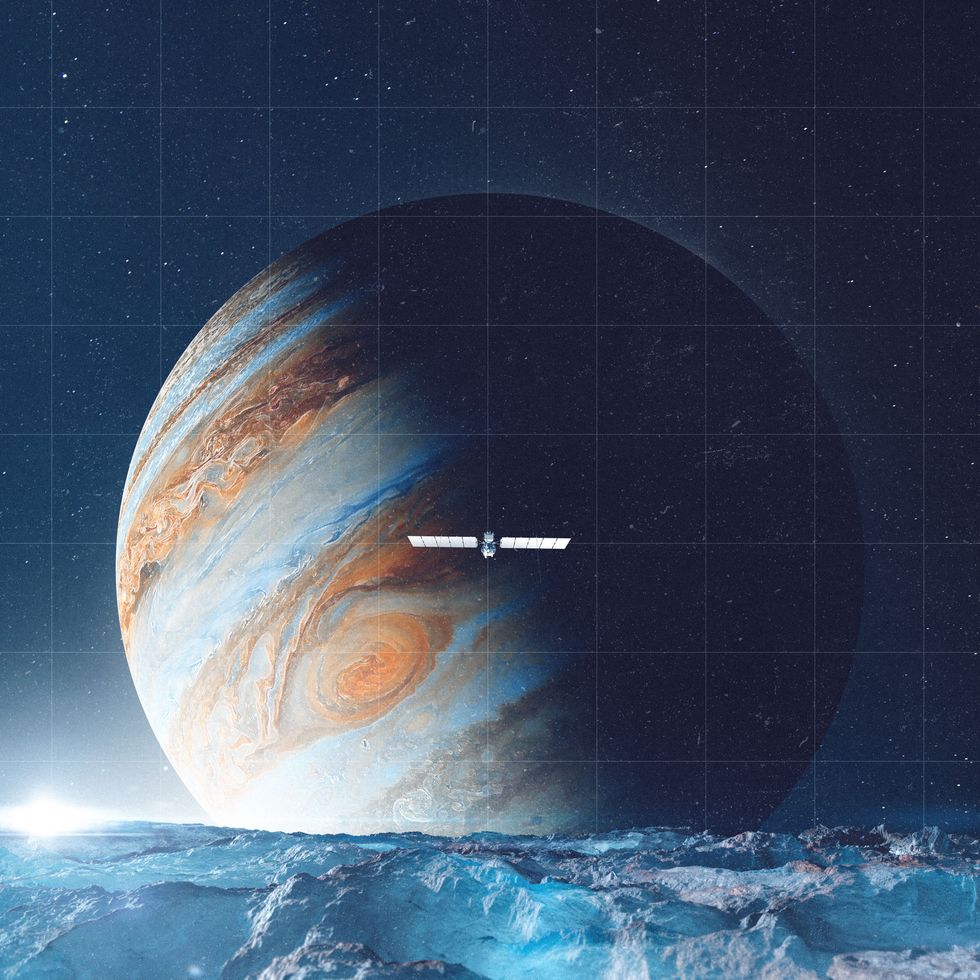
NASA has released a new documentary, titled ‘The Europa Concept,’ chronicling the intricate journey of the Europa Clipper spacecraft. This mission is set to explore Jupiter’s moon Europa, with the primary goal of determining if conditions suitable for life exist beneath its icy shell within its vast ocean, making it one of the most promising locations in the search for extraterrestrial life.
From Concept to Deep Space Voyage
The documentary features interviews with NASA engineers and scientists who have dedicated years to this ambitious mission. Preparations for Europa Clipper began as early as 2013 at the Jet Propulsion Laboratory (JPL) in California. Throughout this period, the team navigated numerous challenges, including the global pandemic and unforeseen disruptions during the spacecraft’s launch in October 2024. Key aspects of the mission highlighted include:
- A five-year journey spanning over 2.9 billion kilometers.
- The largest spacecraft NASA has ever launched on a deep space mission.
- A unique design engineered to withstand the intense radiation environment of Jupiter’s system.
The Scientific Significance of Europa Clipper
Europa has been known to humanity since 1610, but its potential to harbor life has only been fully recognized through subsequent space missions such as Pioneer, Voyager, Galileo, Cassini, and Juno. The new Europa Clipper mission aims to:
- Investigate the ocean hidden beneath Europa’s icy crust.
- Assess the habitability of its environment.
- Understand the influence of Jupiter’s magnetic field and radiation on conditions around Europa.
In the coming years, Europa Clipper will conduct a series of close flybys of Europa, collecting crucial data that promises to expand our understanding of planetary science and the ongoing search for life beyond Earth.