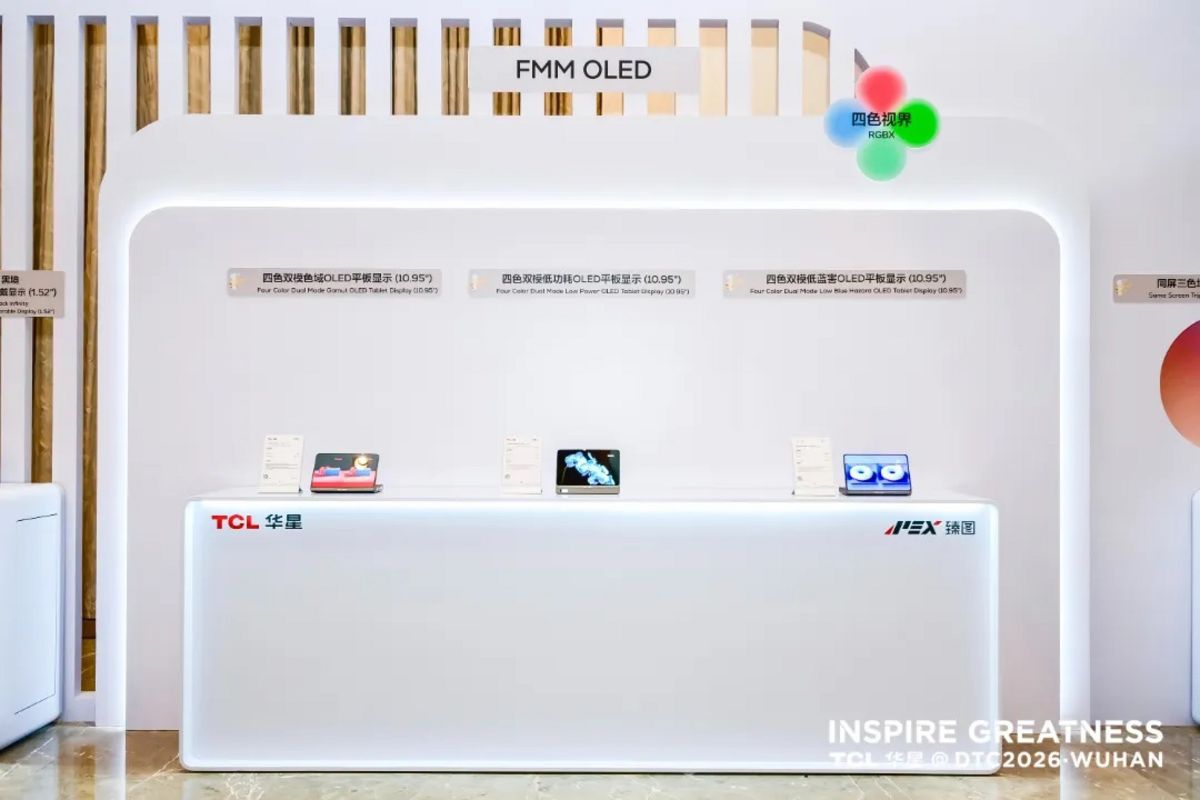
At the recent TCL CSOT Global Display Ecosystem Conference DTC 2026, the display technology giant TCL CSOT showcased a groundbreaking advancement in screen technology: three new 10.95-inch OLED tablet displays built upon their innovative RGBX four-subpixel architecture. This new approach enhances traditional RGB color by introducing a fourth ‘X’ subpixel, a move that promises significant improvements in color gamut, power efficiency, and eye comfort.
Introducing the RGBX Architecture
TCL CSOT’s new displays are based on the RGBX four-subpixel display architecture. This builds upon the standard RGB (Red, Green, Blue) system by adding an additional ‘X’ subpixel. The nature of this ‘X’ subpixel can be varied, utilizing different materials such as deep red phosphorescence, blue phosphorescence, or light blue electroluminescence. By strategically choosing the ‘X’ component, TCL CSOT aims to achieve breakthroughs in three key areas: color gamut, energy efficiency, and blue light reduction.
The three newly unveiled screens – ‘Dual Mode Color Gamut,’ ‘Dual Mode Low Power Consumption,’ and ‘Dual Mode Low Blue Hazard’ – all share the same underlying platform and are derived from the same source. This unified approach allows for a consistent and high-performance display experience across different use cases.
Dual Mode Color Gamut: Expanding Visual Horizons
The first innovation is the world’s first four-subpixel dual-mode color gamut OLED tablet screen. This 10.95-inch display integrates the RGBX four-subpixel technology, specifically by incorporating a deep red (RD) emitter alongside a narrow-spectrum green (G) emitter. This configuration allows the screen to dynamically switch between two color gamut modes: BT.2020 89% and BT.2020 95%. Users can select the mode that best suits the content and their specific needs, offering unparalleled flexibility for content creators and consumers alike, from vibrant movie watching to precise photo editing.
Dual Mode Low Power Consumption: Powering Longer Use
Addressing the ever-present demand for longer battery life, TCL CSOT introduced the world’s first four-subpixel dual-mode low power consumption OLED tablet screen. This 10.95-inch panel utilizes the RGBX pixel design in conjunction with a novel PSF (Phosphor Sensitized Fluorescence) blue phosphorescence sensitization technology. This advanced technique enhances the efficient utilization of blue light excitons, resulting in a remarkable 20% reduction in power consumption. The screen supports both high and low power consumption modes, enabling devices to extend their battery life significantly while still maintaining excellent energy efficiency and visual quality.
Dual Mode Low Blue Hazard: A Healthier Viewing Experience
Eye health is a growing concern, and TCL CSOT’s third debut, the world’s first four-subpixel dual-mode low blue hazard OLED tablet screen, directly tackles this issue. This 10.95-inch display employs the RGBX four-subpixel technology coupled with a light blue electroluminescent (EL) material. It offers a dual-mode system that can switch between a standard mode and a special eye-care mode. Boasting an exceptionally low blue light emission of just 0.5%, this screen is designed for prolonged usage scenarios such as reading, studying, mobile office work, and everyday multimedia consumption, providing a more comfortable and strain-free viewing experience.
The Future of Displays
TCL CSOT’s advancements with the RGBX architecture and these three pioneering OLED tablet screens represent a significant leap forward in display technology. By intelligently introducing a fourth subpixel, the company is not only pushing the boundaries of color and performance but also prioritizing user well-being. These innovations are poised to enhance the viewing experience across a wide range of portable devices, from tablets to potentially future smartphones and laptops.