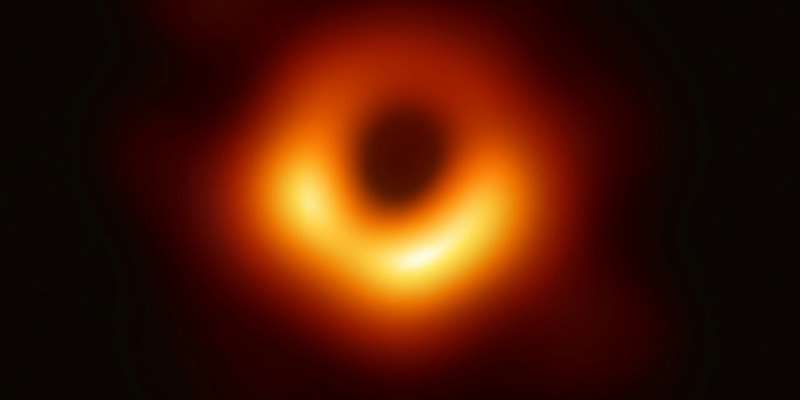
In 2019, the world witnessed humanity’s first-ever image of a black hole, captured by the Event Horizon Telescope (EHT) collaboration. This historic photo, taken at the center of the M87 galaxy some 55 million light-years from Earth, astounded observers with its striking resemblance to predictions from Einstein’s theory of general relativity. However, as is often the case in science, discussions eventually arose regarding the precise details and structure of the black hole’s famous ring of light.
Independent Study for Verification
Recently, a new study published in the journal Nature employed a completely novel approach to analyze the same data used by the original researchers. The findings from this independent analysis not only corroborate the conclusions of the initial investigation but also offer a fresh perspective on the structure of the black hole’s halo, significantly strengthening confidence in this monumental scientific achievement.
A Virtual Telescope the Size of Earth
Creating the first image of a black hole was an undertaking of immense complexity. Imagine trying to spot a donut on the Moon while standing on Earth; such detail requires a telescope as large as our planet. The Event Horizon Telescope project achieved this by combining radio telescopes located across the globe. By integrating signals from these disparate observatories, they effectively created a virtual telescope equivalent in size to Earth, reaching the highest resolution possible at the time.
This technique ushered in a new era of black hole research, enabling scientists to directly observe the extreme conditions surrounding them. The original study involved four independent image-processing teams. While all achieved similar ring-like structures, there were subtle differences in how they rendered the black hole’s details. Researchers attributed these variations to the potential for human judgment and algorithmic biases to influence the imaging process.
Furthermore, technical challenges inherent in combining data from a limited number of sparsely distributed telescopes could introduce errors. Each telescope might contribute its own inaccuracies due to equipment or the effects of Earth’s atmosphere. While astronomers typically correct for such errors, the intricate nature of the processing left room for imprecision, potentially leading to slight distortions.
New Method: “Closed-Form Invariants”
To address these challenges, the new independent study developed an innovative data processing method called “closed-form invariants.” Unlike traditional methods that often compare results from two telescopes, this approach simultaneously integrates data from three telescopes. This allowed for the elimination of errors caused by atmospheric and equipment influences, while also revealing the object’s structure with greater clarity.
Machine Learning for Image Reconstruction
To effectively utilize the data gathered with “closed-form invariants,” the researchers applied a machine learning technique known as GenDIReCT. This method generates images that are consistent with actual measurements. To minimize human bias, the model was trained on images of everyday objects like cats, dogs, and cars, ensuring it had no preconceived notions of what a black hole should look like.
The model underwent rigorous testing, including imaging non-ring structures and real data from other galaxies, such as Centaurus A. Once the model’s accuracy was confirmed, the entire training and testing process was locked down to prevent human factors from influencing the final output.
On December 4, 2025, researchers applied this method to the Event Horizon Telescope’s observational data of the M87 galaxy. The results showed that the black hole’s ring-like structure remained consistent across all data sets. The appearance and diameter of the halo indicate a black hole with a mass of approximately 6.5 billion solar masses, and the viewing angle is almost directly perpendicular to the black hole, resembling an overhead view of a hurricane’s eye.
Verification from a New Perspective
Comparing the results of the new study with the previous images published by the EHT collaboration revealed a complete agreement in the halo’s diameter and overall orientation. While certain details, such as the ring’s width and brightness distribution along its edge, showed some variations, the overall structure of the images was remarkably similar.
This research not only provides a new perspective on the structure of the first black hole image but also dispels some of the uncertainties that arose in previous work. As an additional validation of its success, the researchers developed a complementary method based on traditional statistical techniques. This method, distinctly different from machine learning, also confirmed the black hole’s ring-like structure using the new “closed-form invariants” data.
Overall, this study offers robust independent confirmation of the structure of the supermassive black hole at the center of the M87 galaxy. The potential of this technology extends far beyond astronomy. It could find applications in other fields requiring the integration of data from multiple sensors to reconstruct unknown structures, such as medical diagnostics or seismic modeling.