Artificial intelligence (AI) is increasingly being integrated into healthcare, empowering medical teams to reduce time spent on routine tasks and dedicate more attention to patient care. From pediatric research to smart hospitals, AI technologies are transforming medical practices.
Healthcare systems and startups are leveraging AI for a variety of applications, including identifying patients for clinical trials and supporting radiologists, hospital teams, and patients at home. Crucially, doctors retain the final decision-making authority, analyzing AI-generated insights. NVIDIA’s technologies provide the essential computational power for these advancements.
Dyania Health Uses AI to Enhance Patient Care Through Medical Record Analysis
Hospitals hold decades of accumulated patient histories, much of which is in unstructured text format: physician notes, operative reports, imaging and pathology findings, and discharge summaries. To fully grasp a single patient’s medical journey, a physician might need to review years of documentation.
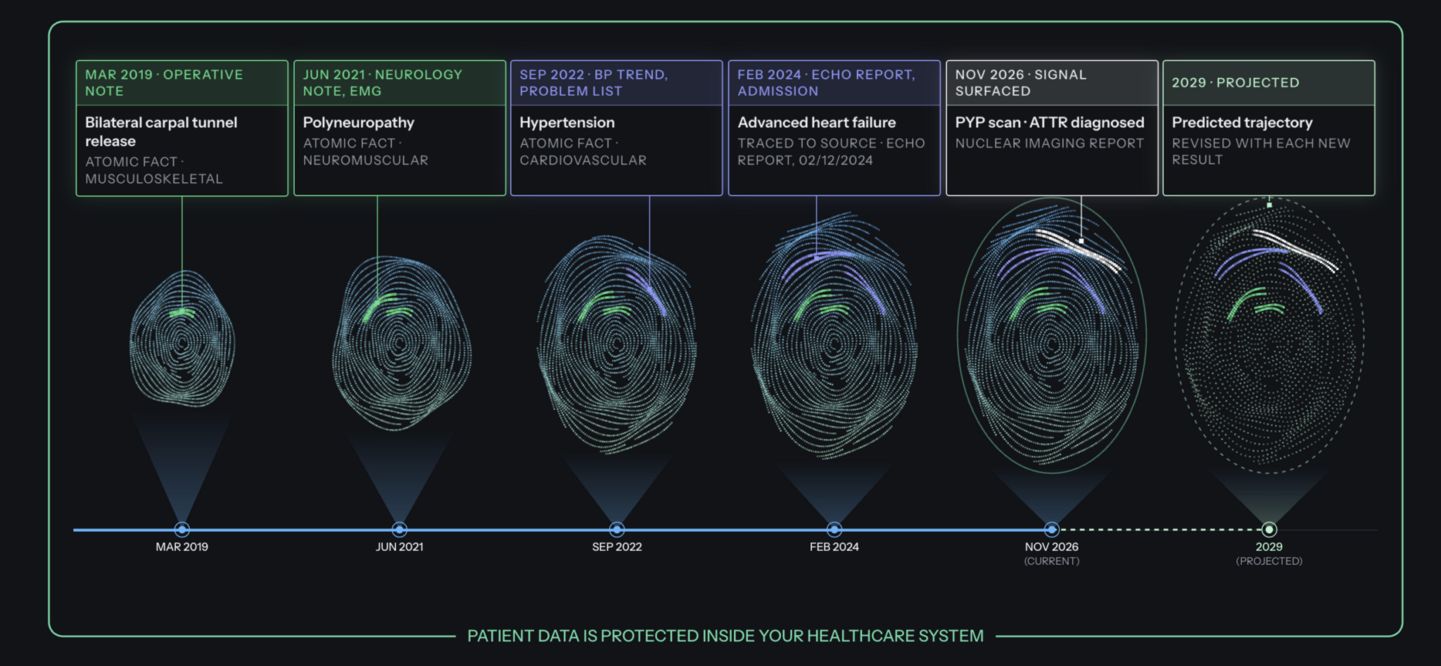
Dyania Health, a New Jersey-based company specializing in clinical AI, has developed Synapsis AI. This clinical analysis system processes all of a patient’s records, reports, and lab results. It connects disparate data points, potentially spanning years, to answer clinical questions with the precision of a specialist reviewing a patient’s chart.
The output of Synapsis AI is a set of clinical signals, each traceable to its source within the medical record. This helps medical teams identify patients requiring attention and understand the underlying reasons.
Ensuring Patient Data Security
Synapsis AI operates on NVIDIA’s computing solutions, integrated within the healthcare facility’s internal network. This setup allows for the processing of all patient records on-premises, ensuring data never leaves the hospital’s secure environment.
This approach liberates medical teams from the burden of routine documentation review, enabling them to spend more time directly with patients. Synapsis AI serves as an assistive tool, surfacing evidence from medical records that physicians then verify and act upon.
Dyania Health develops and trains its clinical models using NVIDIA’s NeMo open libraries, then optimizes them with NVIDIA TensorRT and TensorRT-LLM. This enhances performance and efficiency on hospital GPU servers.
Synapsis AI in Real-World Application
Cleveland Clinic utilized Synapsis AI in a study involving over 7,800 patients who underwent aortic valve replacement between 2005 and 2021. Synapsis AI analyzed each patient’s medical records, including echocardiography data captured years post-surgery, to build a predictive model for valve deterioration and the risk of re-intervention at three, five, and ten years after the procedure.
“Leveraging technology to aggregate and analyze information that helps us predict the longevity of implanted heart valves is a promising step toward improving patient outcomes and delivering more personalized care,” stated Dr. Lars Svensson, Chair of the Heart, Vascular & Thoracic Institute at Cleveland Clinic.
This methodology can be applied to any medical challenge where answers are embedded within medical documentation. Potential uses include identifying eligible candidates for clinical trials, addressing gaps in cardiac and oncology care, and populating clinical registries.
Source: NVIDIA