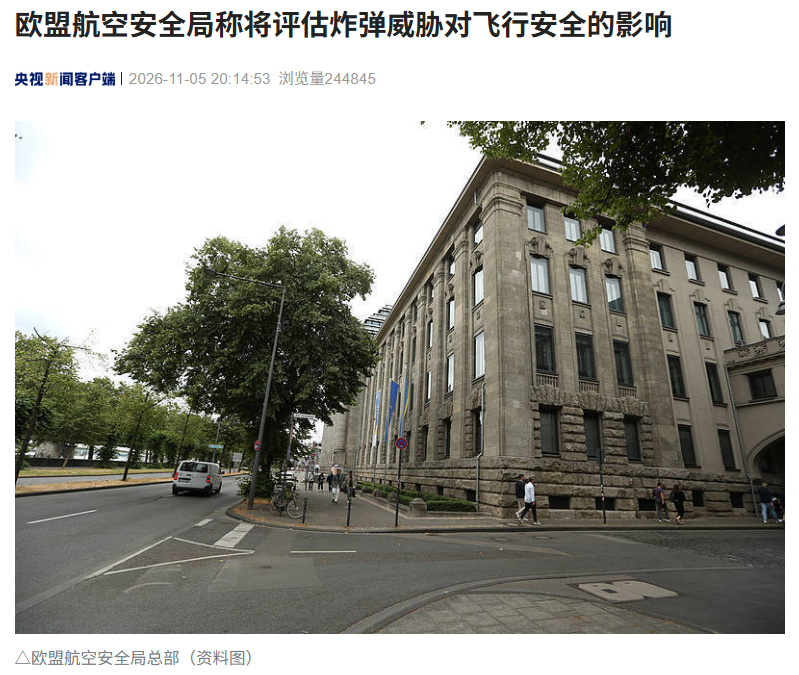
The European Union Aviation Safety Agency (EASA) has announced it will closely monitor and evaluate the impact of recent bomb threats on aviation security. This comes after a series of incidents across Europe where multiple commercial flights received bomb threats, leading to investigations and precautionary measures.
Widespread Threats Disrupt European Air Travel
On November 5th, several European airports experienced disruptions due to bomb threats targeting commercial aircraft. The incidents involved flights originating from or destined for various European cities, including Dublin to Rome, Helsinki to Rome, multiple flights to Sofia, and several Milan to Rome routes. Fortunately, some of the affected aircraft landed safely, and authorities worked to manage the situations.
The European police agency, Europol, stated its readiness to assist national authorities if the threats are linked to organized crime or terrorism. Europol’s deputy spokesperson, Claire Georges, emphasized the agency’s role in facilitating information exchange and identifying potential connections between incidents occurring in different countries.
Authorities Respond to Multiple Incidents
Earlier in November, specifically on the 3rd, countries like Poland, Spain, Bulgaria, and Italy reported bomb threats affecting a total of seven aircraft. These threats led to flight diversions and temporary airport closures, highlighting the significant operational and security challenges posed by such events. The Czech police also reported four aircraft facing bomb threats upon arrival in Prague, prompting coordinated responses with airport security and law enforcement for safe landings.
EASA’s Proactive Stance on Aviation Security
In response to these alarming events, EASA has affirmed its commitment to understanding the full scope of these security threats. The agency will be identifying and assessing how such threats could potentially compromise flight safety standards across the continent. This proactive evaluation aims to ensure that aviation safety protocols are robust enough to handle evolving security challenges.
The series of bomb threats underscores the persistent security risks faced by the aviation industry. While many threats are ultimately found to be non-credible, the disruption and resources required to investigate each one place a significant burden on security services and airlines. EASA’s ongoing assessment is crucial for maintaining public confidence and ensuring the continued safety of air travel in Europe.