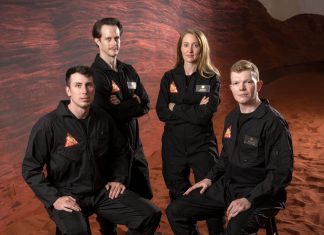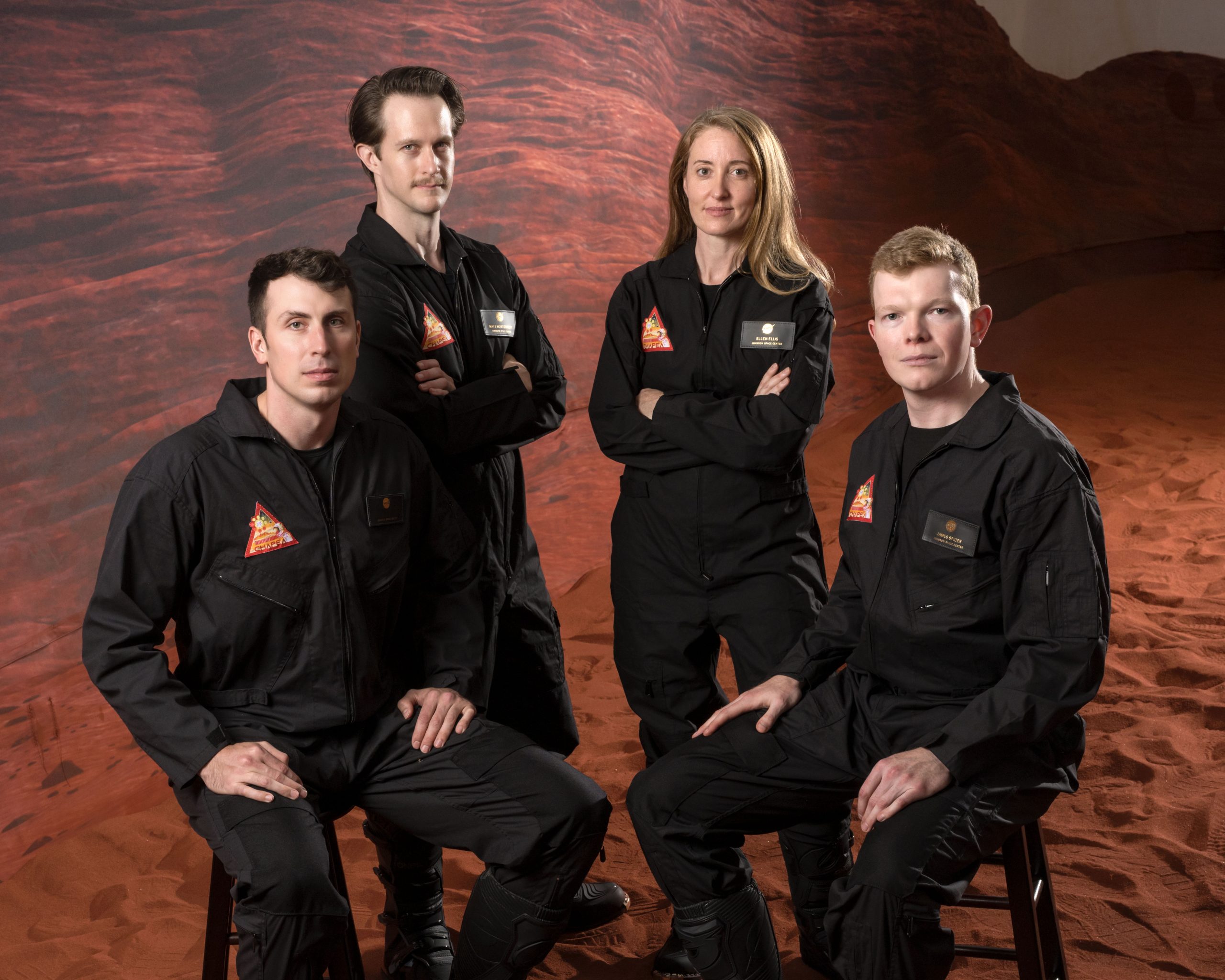
Four volunteers who have been living and working in a simulated Mars environment for over a year are set to emerge from their habitat this Saturday, October 31st. The Crew Health and Performance Exploration Analog (CHAPEA) mission, conducted by NASA at its Johnson Space Center in Houston, marks a significant milestone in preparing for future human deep-space exploration. The data gathered from their 378 days of isolation will be crucial for understanding and mitigating the risks associated with long-duration spaceflights, including upcoming Artemis missions to the Moon and potential journeys to Mars.
Living on the Red Planet, Virtually
The CHAPEA Mission 2 crew, consisting of Ross Elder, Ellen Ellis, James Spicer, and Matthew Montgomery, began their simulated Mars experience on October 19, 2025. They have been confined to a 1,700-square-foot, 3D-printed habitat, meticulously replicating the conditions and challenges astronauts might face on Mars. Their daily routines included simulated spacewalks, rigorous exercise, habitat maintenance, and even growing plants, all while contending with stressors like communication delays, limited resources, and profound isolation. This immersive experience provides invaluable insights into the physiological and psychological demands of deep-space travel.
Insights for Future Missions and Crew Well-being
The extensive data collected during the CHAPEA mission will directly inform NASA’s strategies for future lunar and Martian expeditions. Specifically, it will help optimize vital aspects of mission planning, such as designing effective food systems, managing crew time efficiently, and understanding bandwidth limitations on NASA’s Deep Space Network. Beyond the technical aspects, the mission’s findings are also vital for enhancing the medical care and psychological support provided to astronauts. By understanding the impacts of isolation and stress, flight doctors and psychologists can develop stronger practices to ensure crew readiness and performance during these demanding journeys into the cosmos.
Source: NASA