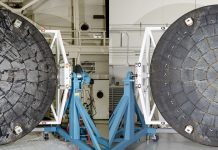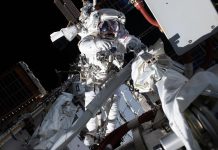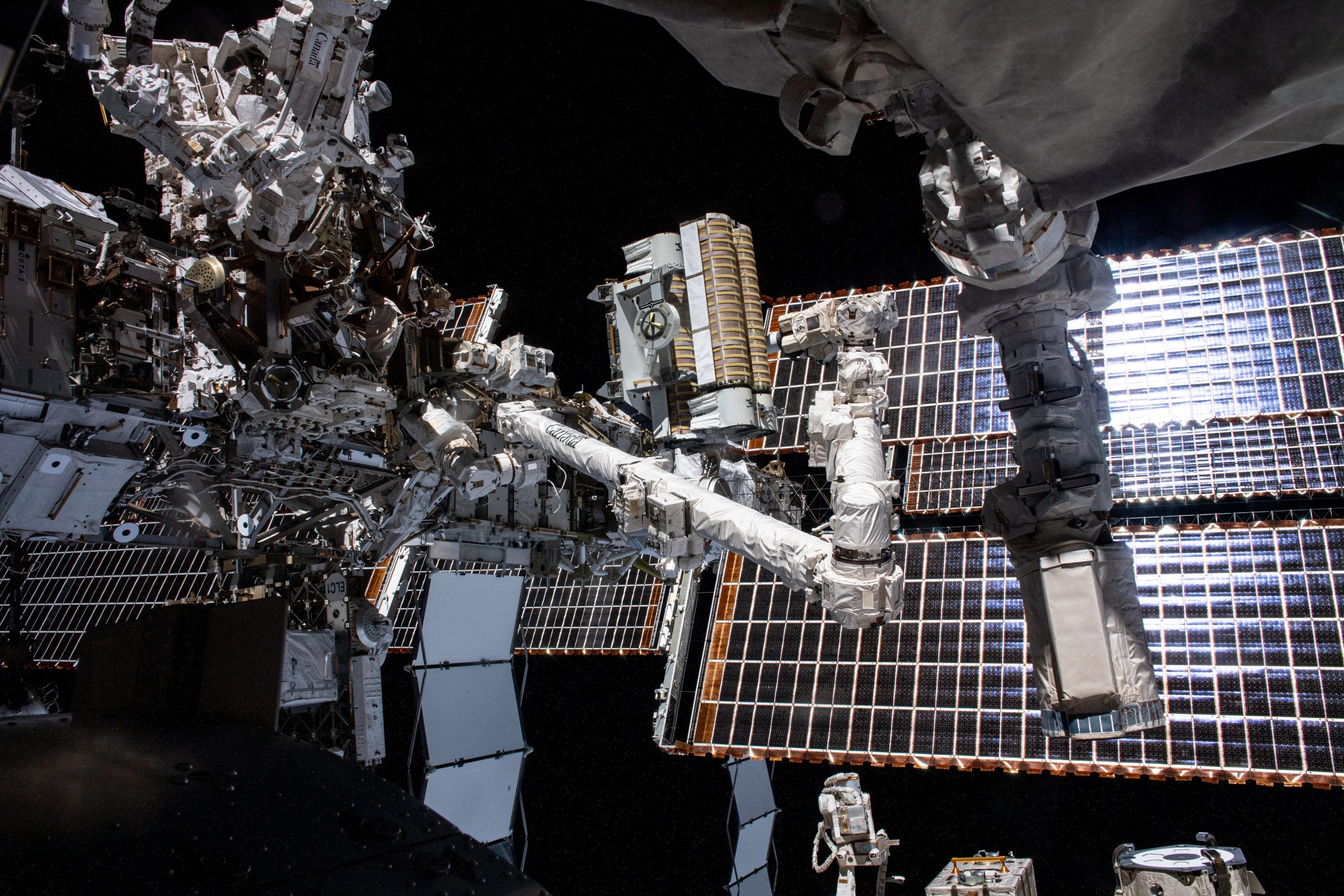
The International Space Station (ISS) has received a substantial upgrade to its power generation capabilities with the successful installation of new Roll Out Solar Arrays (IROSAs). These advanced arrays, developed by NASA, are significantly boosting the station’s energy supply, which is crucial for sustaining life support systems, powering scientific research, and preparing for future deep space missions.
Unfurling Power for the Orbiting Laboratory
The IROSAs represent a significant leap in solar technology for space applications. Unlike traditional, rigid solar panels, these new arrays are designed to launch compactly, rolled up like a yoga mat within a cylinder. Once in orbit, they unfurl autonomously, a process that minimizes the need for complex or risky spacewalks. This innovative design not only reduces launch mass and volume but also utilizes a self-deploying system, enhancing safety and efficiency. A technology demonstration in 2017 proved the effectiveness of this concept, paving the way for their widespread adoption.
More Energy for Science and Exploration
Each IROSA is approximately half the size of the ISS’s older solar arrays but delivers a remarkable increase in power output, generating around 28 kilowatts of additional energy. Between 2021 and 2023, six of these advanced arrays were installed. The ongoing need for more power, driven by evolving research and operational demands, led to the launch and installation of an additional pair of IROSAs aboard a SpaceX resupply mission in 2024. With a total of eight IROSAs now operational, the ISS’s power generation has been enhanced by over 160 kilowatts. This revitalized power system not only supports the station’s current legacy in low Earth orbit but also serves as a vital testbed for technologies essential for future human exploration missions, including planetary defense demonstrations and journeys further into the solar system.
Source: NASA