NASA’s rigorous post-mission analysis has confirmed that the heat shield of the Orion spacecraft performed exceptionally well during the Artemis II mission, successfully protecting the four astronauts and onboard systems during their scorching return to Earth. This critical validation is a monumental step towards future crewed lunar missions, ensuring the safety of astronauts as they journey further into space than ever before.
A Fiery Reentry, Perfectly Managed
The Artemis II mission, which saw astronauts orbit the Moon, culminated in a dramatic re-entry into Earth’s atmosphere. The Orion spacecraft reached speeds of nearly 39 times the speed of sound, experiencing external temperatures soaring above 4,000 degrees Fahrenheit (2,200 degrees Celsius). Despite this intense environment, the astronauts inside the capsule remained comfortable, with cabin temperatures maintained in the mid-70s Fahrenheit (around 24 degrees Celsius). This success is a direct testament to the effectiveness of Orion’s advanced thermal protection system.
Following lessons learned from the Artemis I mission, NASA strategically adjusted Orion’s re-entry trajectory for Artemis II. This modification aimed to reduce the duration the heat shield was exposed to high temperatures where phenomenon were observed on the previous mission. This proactive approach proved effective, leading to a significantly cleaner re-entry.
Reduced Damage and Enhanced Consistency
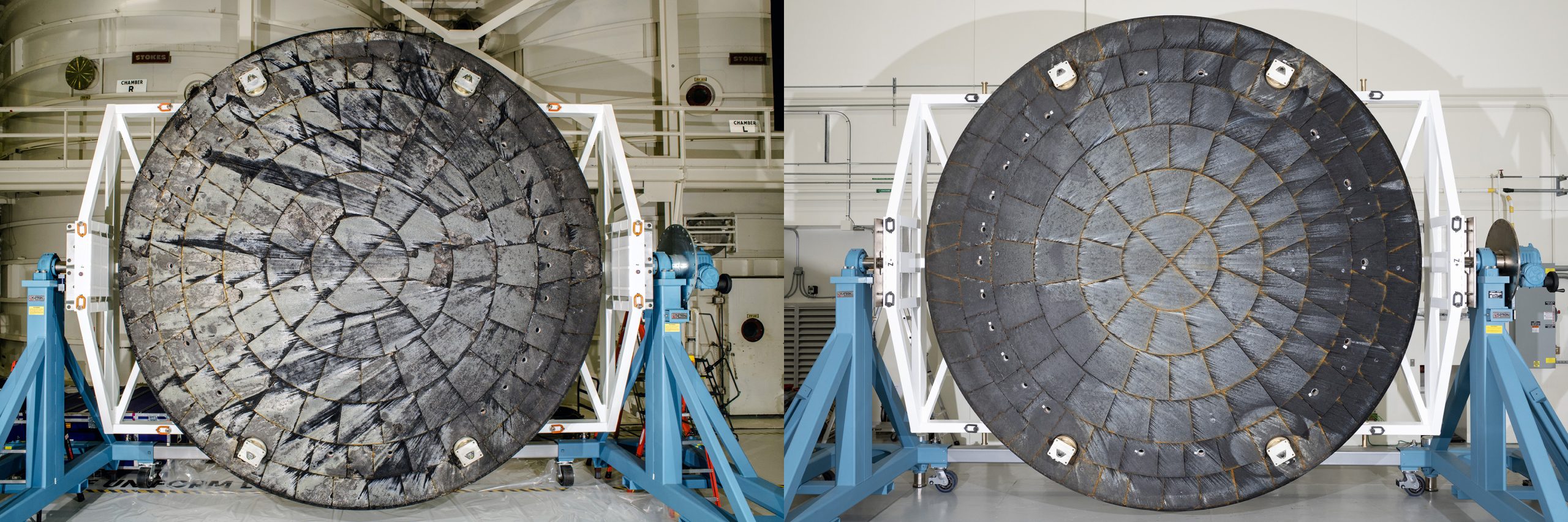
Post-splashdown inspections, beginning with underwater imagery captured by U.S. Navy divers, revealed a remarkable improvement in the heat shield’s condition compared to Artemis I. Engineers found a substantial reduction in cracks and char loss. Further in-depth examinations at NASA’s Kennedy Space Center and Marshall Space Flight Center, involving sample extraction and X-ray scans of the heat shield’s 186 unique Avcoat blocks, provided invaluable data on its performance.
The analysis concluded that the heat shield experienced a ten-fold decrease in char loss and cracking due to the trajectory modification. Specifically, only nine instances of char loss were noted on the Artemis II heat shield, a dramatic improvement from the 103 observed during Artemis I. The robust design also demonstrated consistency between the two missions, with critical areas like the seams between Avcoat blocks and the bolts holding the heat shield together performing as expected.
Additionally, the inspection of Orion’s backshell, composed of 1,300 ceramic tiles, showed expected performance, with no signs of overheating. The features designed to protect penetrations like windows and hatches also met expectations.
Source: NASA