NASA’s SpaceX CRS-35 mission is en route to the International Space Station (ISS) carrying a suite of vital research experiments focused on human and plant health, as well as the study of drug-resistant organisms. This latest resupply mission from Cape Canaveral Space Force Station in Florida is set to advance scientific understanding that holds the potential to benefit life both on our planet and for future deep-space explorers.
Unlocking Brain Health Secrets in Orbit
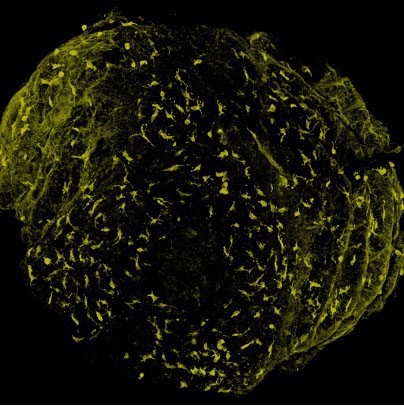
A groundbreaking precision health investigation is embarking on a five-week journey to the ISS to tackle a fundamental question: how does the human brain respond to the unique environment of space? This experiment will place small, lab-grown models of the human brain in orbit, allowing researchers to meticulously compare their cellular-level changes with identical models kept on Earth. The insights gained could significantly deepen our understanding of how the brain reacts to stress, paving the way for strategies to mitigate potential risks to astronaut brain health during extended missions to the Moon and Mars.
Cultivating Resilient Crops for Space and Earth
Understanding how plant diseases fare in microgravity is crucial for future space agriculture. A dedicated crop disease study aboard the CRS-35 mission will compare the molecular and structural development of plants infected with a specific fungus, both in space and on Earth. The findings from this research could be instrumental in guiding plant breeding efforts to develop disease-resistant crops, a critical step in ensuring food security for future space missions. Beyond providing sustenance and dietary variety for astronauts, space crops play a vital role in life support by absorbing carbon dioxide, producing oxygen, and recycling water – essential functions for long-duration human exploration.
Accelerating Astronaut Health Assessments
The mission also includes the first in-orbit test of a compact microplate reader, a device designed to revolutionize how astronaut health is monitored. This experiment, part of the Commercially Enabled Rapid Space Science initiative, will evaluate the reader’s capability to detect and quantify key biomarkers such as antibodies, antigens, and proteins directly on the space station. Such a capability would enable scientists to obtain crucial data rapidly, eliminating the delay associated with returning samples to Earth for analysis. This advancement is vital for the timely detection of infections and other health concerns in astronauts, while also enhancing scientific capabilities in remote exploration environments where resupply is challenging.
Combating Superbugs in Space and at Home
Returning for its final planned deployment, a precision health investigation is set to meticulously study the survival and evolution of antibiotic-resistant bacteria in the microgravity environment. Astronauts will actively sample surfaces throughout the ISS to monitor for the presence of these drug-resistant organisms. This research is paramount for developing effective strategies to protect astronauts from bacterial infections during prolonged missions. Furthermore, the findings could shed light on the development of “superbugs” on Earth, offering valuable insights into how antibiotic resistance emerges from the widespread use of these critical medications.
Source: NASA