New data from NASA’s SPHEREx (Spectro-Photometer for the History of the Universe, Epoch of Reionization, and Ices Explorer) space telescope is shedding light on the enigmatic class of celestial objects known as brown dwarfs. These cosmic bodies, straddling the line between planets and stars, have been found to possess atmospheres rich in chemical compounds, similar to those found in the giant planets of our solar system. This discovery, published in The Astrophysical Journal, is helping scientists better understand the formation and evolution of these mysterious “dark wanderers” of space.
Unusual Celestial Bodies: From Stars to Planets
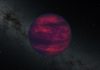
Brown dwarfs were first identified in the 1990s. They form from the collapse of gas clouds, much like ordinary stars, but they lack the sufficient mass to sustain hydrogen fusion reactions in their cores. These dimly glowing balls of warm gas share characteristics with Jupiter and Saturn. However, unlike most planets, brown dwarfs drift through the darkness, unbound to a parent star, and are heated solely from within. “They’re sort of the goth kids of the solar system,” jokes Zafar Rustamkulov, lead author of the new study and a scientist at IPAC, Caltech’s information science center. “Unlike exoplanets, free-floating brown dwarfs are entirely independent celestial objects that will just fade into eternity. We’re still learning how complex they are.”
To date, only a few dozen of these “dark wanderers” have been studied in detail. SPHEREx, launched in March 2025, is enabling scientists to analyze thousands of such objects. The telescope has examined 37 of the closest brown dwarfs, covering their entire temperature range—from approximately 2,200 degrees Celsius down to minus 20 degrees Celsius. By measuring their brightness across 102 different colors, from the deepest red to invisible infrared light, SPHEREx is creating their spectra. These spectra revealed the presence of water, carbon dioxide, carbon monoxide, and methane in the atmospheres of brown dwarfs.
SPHEREx: A New View of Cosmic Darkness
“We’re seeing the signatures of these molecules and how they change from object to object across the entire temperature range,” noted study co-author J. Davy Kirkpatrick. “Our report focuses on just three dozen, but we have thousands more that we are currently analyzing. I’m really excited to see what the diversity of brown dwarfs is across the universe.”
SPHEREx operates from orbit, allowing it to observe at wavelengths that are practically inaccessible to ground-based telescopes due to absorption by water vapor in Earth’s atmosphere. “We’re capturing light from the deep, red clouds of brown dwarfs all over the sky,” Rustamkulov added.
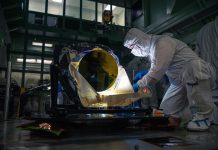
The detection of brown dwarfs is, in essence, a secondary mission for SPHEREx. The telescope is creating full-sky maps, stitching together around 3,600 unique images daily. This data will aid scientists in reconstructing events from the first moments after the Big Bang. Additionally, SPHEREx is searching for chemical elements necessary for life and interstellar ice that could be the source of oceans on distant worlds.
Thanks to its spectral coverage, SPHEREx is for the first time imaging thousands of brown dwarfs across the deep red and infrared light spectrum, where molecules create distinct patterns in the light. These patterns change as brown dwarfs age and cool. Some of the objects observed by SPHEREx are in dynamic developmental stages, with their exotic clouds thinning out to reveal methane-rich atmospheres. “Current models generally capture the chemical trends, but when it comes to these cloud transitions, the models can’t match the data,” Rustamkulov said. “No two brown dwarfs are alike. Even at the same temperature, their spectra look quite different.”
“These findings are a call to action to explore even more of these dark worlds,” emphasized Kirkpatrick. “This journey has turned many of us into amateur meteorologists. We know how difficult it is to predict the weather on our own planet, and we understand that explaining the phenomena we’re seeing on these strange, cold objects will be just as challenging.”