Tim Cook, Apple’s Executive Chairman, has sold a significant portion of the company’s stock, cashing in approximately $63.8 million. The transaction took place on October 2nd, according to a report by Barron’s on October 6th.
Stock Sale Details
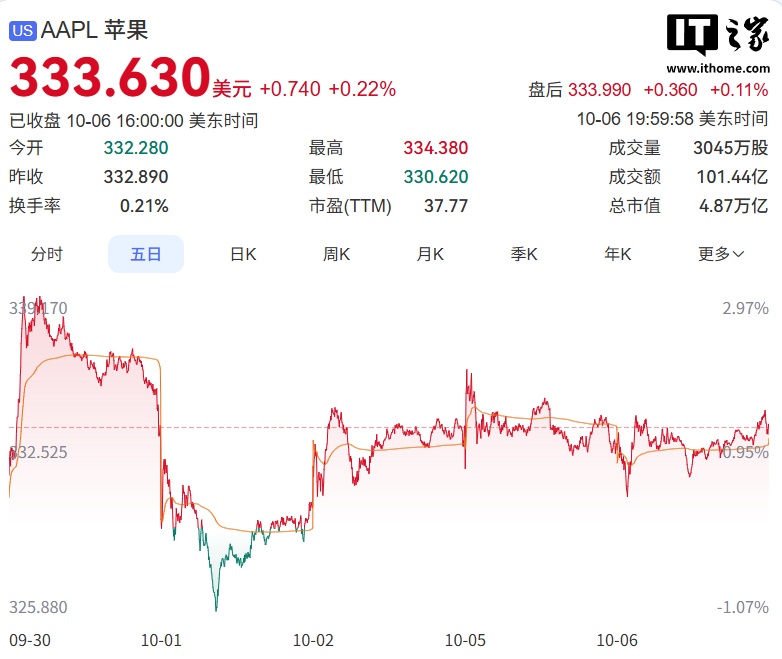
The sale involved 374,541 shares of Apple common stock, which were converted from restricted stock units (RSUs) that vested on October 1st. The shares were sold at prices ranging from $331.44 to $333.94 per share. This places the sale price close to Apple’s 52-week high of $345.34.
It’s important to note that Apple withheld 199,038 of these shares to cover tax obligations arising from the RSU vesting. The value of the withheld shares was approximately $65.7 million, calculated at $330.32 per share.
Transaction Framework
The stock sale was executed as part of a pre-arranged trading plan, known as a 10b5-1 plan, which Cook had established on May 28th. This type of plan allows company insiders to sell stock at predetermined times and prices, providing a structured approach to managing their holdings and avoiding potential insider trading accusations.
In addition to the sale, Cook also transferred 26,325 shares as a gift on the same day. Following these transactions, Cook’s trust holds 3,237,843 shares of Apple common stock.
Context and Implications
While the sum of $63.8 million might seem substantial, it represents a small fraction of Tim Cook’s overall holdings and is executed within a structured plan. Executives often sell shares for diversification, tax planning, or personal financial needs. The timing of the sale, near a 52-week high, suggests a strategic move by Cook to realize some gains.
Apple’s stock has performed strongly over the past year, contributing to the high value of these transactions. The company continues to be a dominant force in the technology sector, driven by its ecosystem of hardware, software, and services.
This stock sale by the CEO is a routine event for many public company executives and is typically not indicative of a lack of confidence in the company’s future prospects, especially when conducted under a 10b5-1 plan.