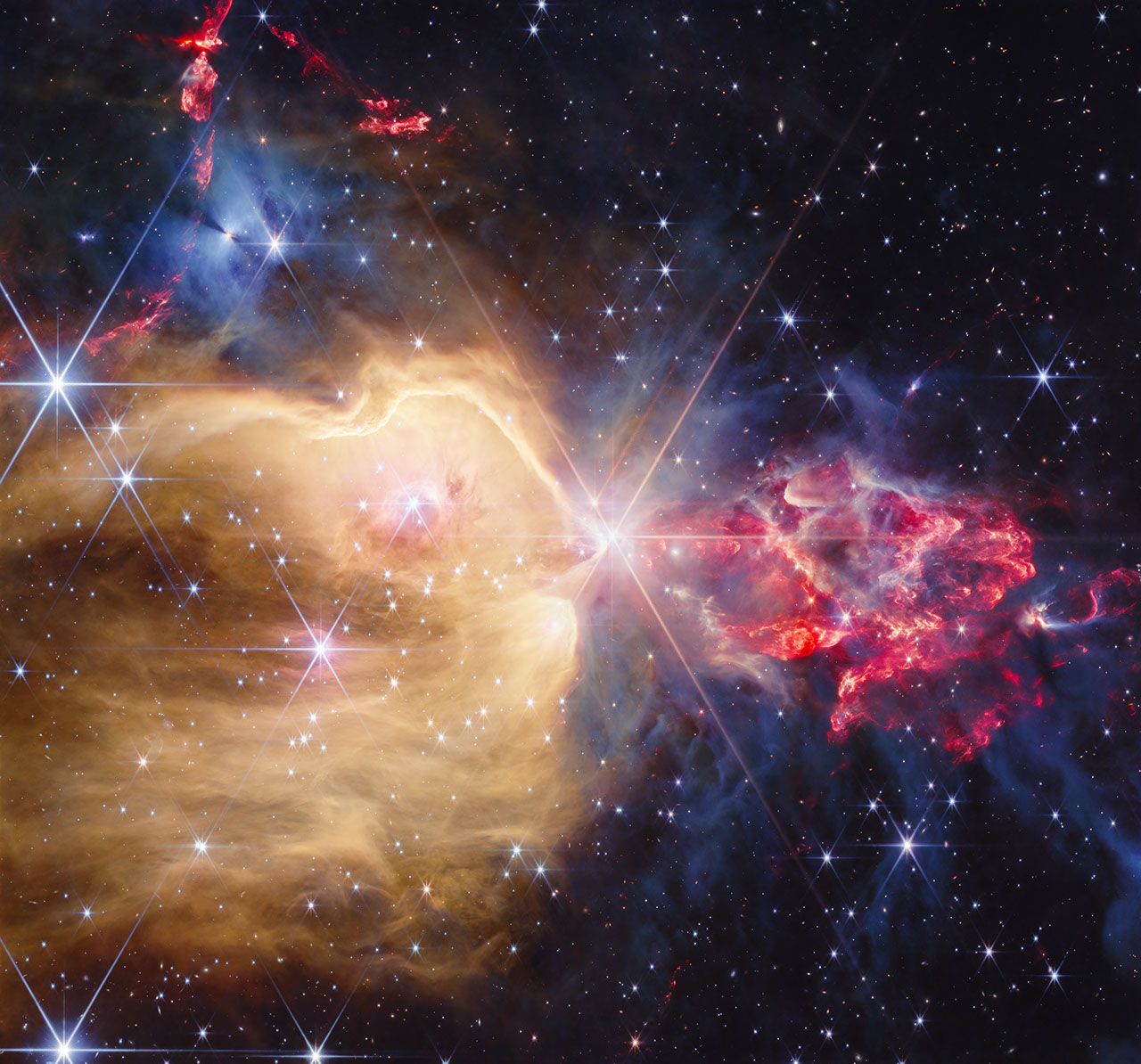
NASA’s James Webb Space Telescope has captured a breathtaking new view of the NGC 7129 nebula, revealing the tumultuous and energetic process of star formation in unprecedented detail. This stellar nursery, located approximately 3,300 light-years away, is a cosmic cauldron where young stars are igniting, their powerful jets and winds sculpting the surrounding dust and gas into dramatic structures.
Peering Through Cosmic Dust
Stars, the fundamental building blocks of galaxies and the factories for heavier elements, begin their lives shrouded in the dense, cold clouds of gas and dust. These dusty cocoons often obscure the earliest stages of stellar evolution from view. However, Webb’s remarkable infrared sensitivity allows it to pierce through these veils of dust, offering astronomers a clear look at the genesis of stars. In NGC 7129, Webb has pinpointed numerous protostars and young stars that were previously hidden.
A Tale of Two Stellar Outflows
The nebula presents a dynamic interplay of stellar activity. At its heart lies LkH(alpha) 234, a pre-main-sequence star about 5 to 8 times the mass of our Sun. Its immense energy has carved out a vast, golden cavity in the surrounding molecular cloud, a testament to powerful outflows ejected during its formation. These outflows, along with the star’s intense light, energize the gas, causing it to glow brightly. While much of the material has been expelled, the remaining compressed gas creates the ideal conditions for new stars to form.
To the right of the central star, a different scene unfolds. Here, clumpy red material hides even younger objects: protostars. These nascent stars are still accumulating mass and ejecting superheated material in powerful outflows. These energetic streams collide with the surrounding dense gas, creating shockwaves that give the region its textured and chaotic appearance. The overlapping outflows from multiple protostars contribute to the intricate and dynamic vista.
Source: NASA