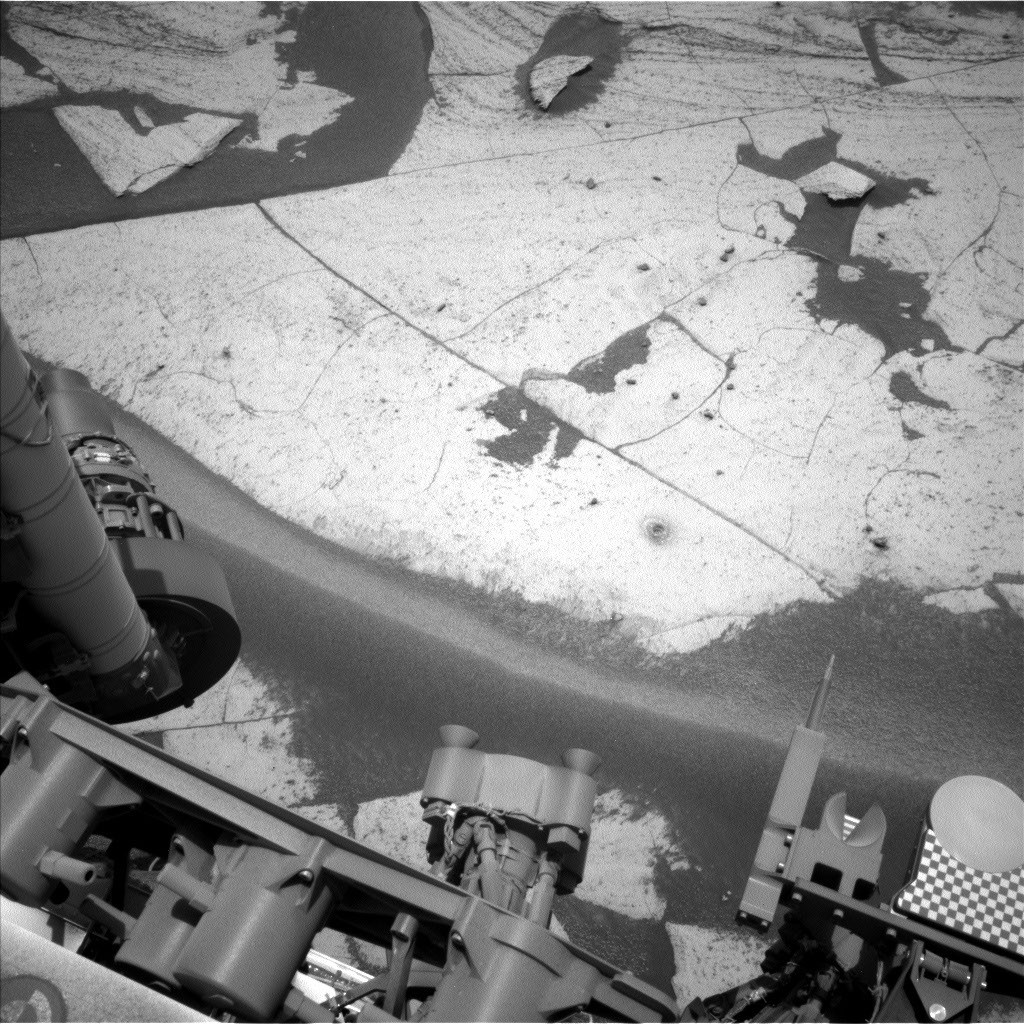
NASA’s Curiosity rover is back in its virtual laboratory on Mars, meticulously analyzing rock samples drilled from the “Basque Lakes” region. This intensive period of scientific investigation, spanning Sols 5029-5035 (Martian days), is crucial for understanding the Red Planet’s geological history and potential for past habitability.
Rock Analysis in Full Swing
The core of Curiosity’s recent activities involved a deep dive into Martian rock composition. The rover utilized its sophisticated onboard laboratory instruments, CheMin and SAM, to dissect a sample obtained from the “Basque Lakes” drill hole. CheMin’s initial analysis provided vital data, guiding SAM’s tunable laser spectrometer (TLS) in its measurements of volatile compounds within the sample. The results from the TLS run will determine if further, more detailed mass spectrometry analysis is needed next week, offering a step-by-step approach to uncovering the secrets held within the Martian rock.
Beyond the Lab: Environmental Context and Observation
While the laboratory work demands a significant portion of the rover’s power, Curiosity hasn’t neglected its environmental monitoring and broader observational duties. The Mastcam instrument captured a comprehensive 360-degree panorama, providing essential context for the drill site’s geological setting. This imagery also informed subsequent science requests, including detailed Mastcam imaging of nearby structures and ChemCam’s Remote Micro-Imager (RMI) observations of the “Cordillera” butte. Additionally, a series of photometry observations using Mastcam and Navcam are helping scientists understand how the spectral characteristics of targets change with the angle of the sun, refining our ability to interpret rover and orbital imagery. ChemCam also continued its chemical analysis of various materials in the vicinity, from the drilled rock to sand ripples and loose clasts of unknown origin. Environmental data from REMS, RAD, and DAN, along with atmospheric monitoring of dust, clouds, and dust devils, were also systematically collected.
Source: NASA