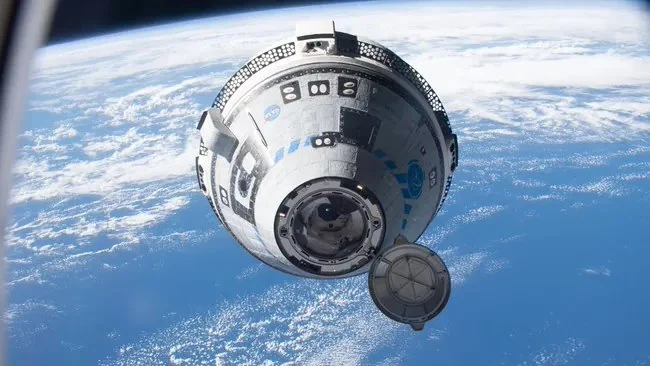
NASA has unveiled its latest plans for Boeing’s Starliner spacecraft, outlining a path for its return to crewed flights to the International Space Station (ISS). The agency is targeting as early as December of this year or January 2025 for an uncrewed test flight, dubbed ‘Starliner-1’, to the ISS. This mission is crucial for verifying improvements made to the spacecraft following previous challenges.
Starliner-1: An Engineering Assessment Mission
The Starliner-1 mission will serve as an engineering evaluation, designed to test recent modifications to the spacecraft, validate its thermal environment, and gather essential performance data required for certification. NASA emphasizes that this uncrewed flight is vital for identifying any potential risks before astronauts board for subsequent missions.
Future Missions and Vulcan Rocket Certification
Beyond the immediate test flight, NASA is planning two additional Starliner missions to the ISS: the fifth and sixth crewed rotations. In a significant development for future launches, NASA will collaborate with Boeing and United Launch Alliance (ULA) to certify Starliner for crewed launches atop ULA’s new Vulcan rocket, which will succeed the now-retired Atlas V.
Lessons Learned from the CFT Mission
Boeing’s Starliner experienced a turbulent maiden crewed flight test, the Crewed Flight Test (CFT), which launched on June 5, 2024. The mission, carrying two NASA astronauts, faced significant hurdles including thruster malfunctions and helium leaks. Initially slated for an 8- to 14-day stay at the ISS, the issues forced an extended stay for the astronauts. They eventually returned to Earth on March 3, 2025, aboard a SpaceX Crew Dragon spacecraft.
In February of this year, NASA released its investigation findings, classifying the CFT mission as a ‘Class A’ incident – the most severe category – due to the prolonged station stay caused by spacecraft failures. The report recommended 61 corrective actions to ensure future flights meet the stringent standards of human spaceflight.
In response to these findings, Boeing has implemented improvements to the Starliner’s service module, focusing on areas such as thermal management. The upcoming Starliner-1 mission will be the primary opportunity for NASA to assess the effectiveness of these crucial upgrades.
Continued Partnership and Future Prospects
Earlier this month, reports indicated that NASA was in discussions with Boeing regarding further Starliner missions. Sources suggested that plans were being considered for the Starliner to undertake at least 10 new crewed missions over the coming years, highlighting NASA’s continued confidence in the spacecraft’s potential despite past setbacks.
The planned ‘Starliner-2’ crewed mission is currently slated for 2028. This timeline suggests a methodical approach by NASA, prioritizing safety and system validation before committing to regular crewed transportation services.