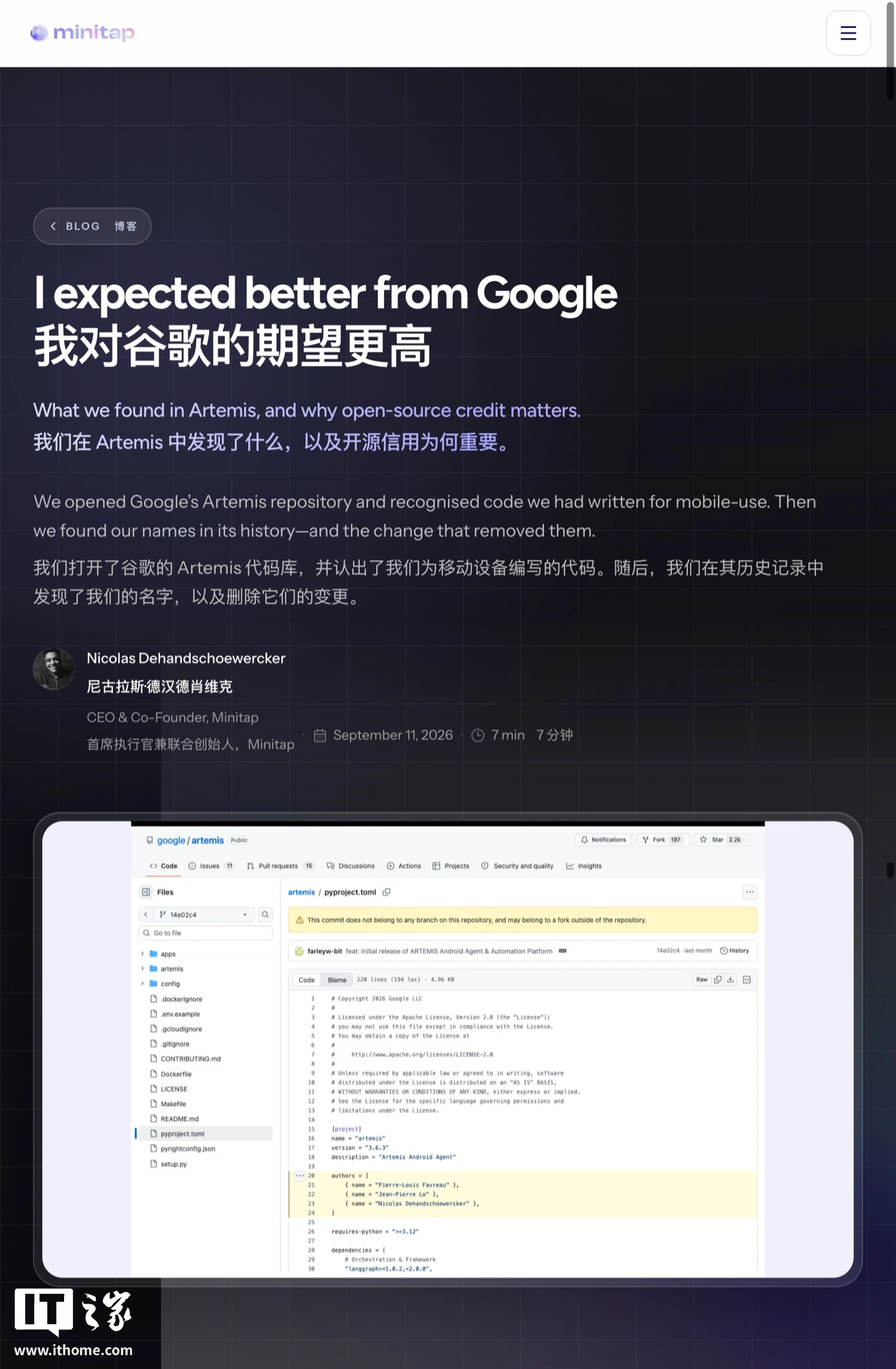
Open-source AI mobile automation project Minitap has publicly accused Google of using its code, prompts, and test cases without proper attribution. According to a report by Neowin, Minitap co-founder and CEO, Nikola Dehandschutter, stated that Google incorporated content from Minitap’s open-source mobile-use project into its Artemis mobile automation codebase. The mobile-use project is designed to allow AI to control real Android devices using natural language.
Code Similarities Raise Concerns
Minitap alleges that Google’s Artemis project adopted specific implementations for Android device connections, Hopper agent instructions, and WhatsApp messaging tasks that were originally developed by Minitap. The company highlighted that the code in question is virtually identical, word-for-word, between the two projects. Notably, a file within the Artemis package that initially listed the names of Minitap authors Pierre-Louis de la Favière, Jean-Pierre Le Goff, and Nikola Dehandschutter was replaced in August via a forced push.
Following these accusations, Google reportedly added an attribution in the code stating, “This project includes source code developed by Minitap.” However, Minitap points out that open-source licensing, such as the Apache 2.0 license under which this code was released, requires derivative projects to retain copyright notices and clearly state any modifications made. Simply adding an attribution after the fact, especially when initial code was used without it, does not fully comply with the spirit or letter of such licenses.
Benchmarking Discrepancies and Project Evolution
Further complicating the situation are discrepancies in benchmarking scores. Minitap has reportedly been seeking updates to its outdated benchmark scores on the AndroidWorld rankings for some time without success. In contrast, Google’s Artemis project achieved a second-place ranking with scores updated just last August. It is worth noting that the AndroidWorld benchmark system itself is maintained by Google. This timeline raises questions about the data used for Artemis’s ranking and its potential impact on Minitap’s visibility.
Dehandschutter also mentioned that Minitap transitioned to using closed-source code to support its current products after developing the initial open-source contributions. He indicated that the Minitap of today is “a completely different entity” and suggested that Google is approximately seven months behind in terms of technological progress. This implies that while Google may have utilized Minitap’s foundational code, Minitap has moved on to more advanced, proprietary solutions.
The Importance of Open Source Compliance
This incident underscores the critical importance of adhering to open-source license terms. While open-source software fosters collaboration and innovation, it comes with specific obligations for users. These obligations ensure that the original creators receive proper credit and that transparency is maintained regarding code origins and modifications. Failure to comply can lead to disputes and damage trust within the developer community.
The situation highlights a potential lapse in Google’s due diligence regarding open-source code usage. As AI development accelerates, especially in mobile automation, maintaining rigorous standards for code attribution and licensing compliance becomes increasingly vital for all organizations involved.