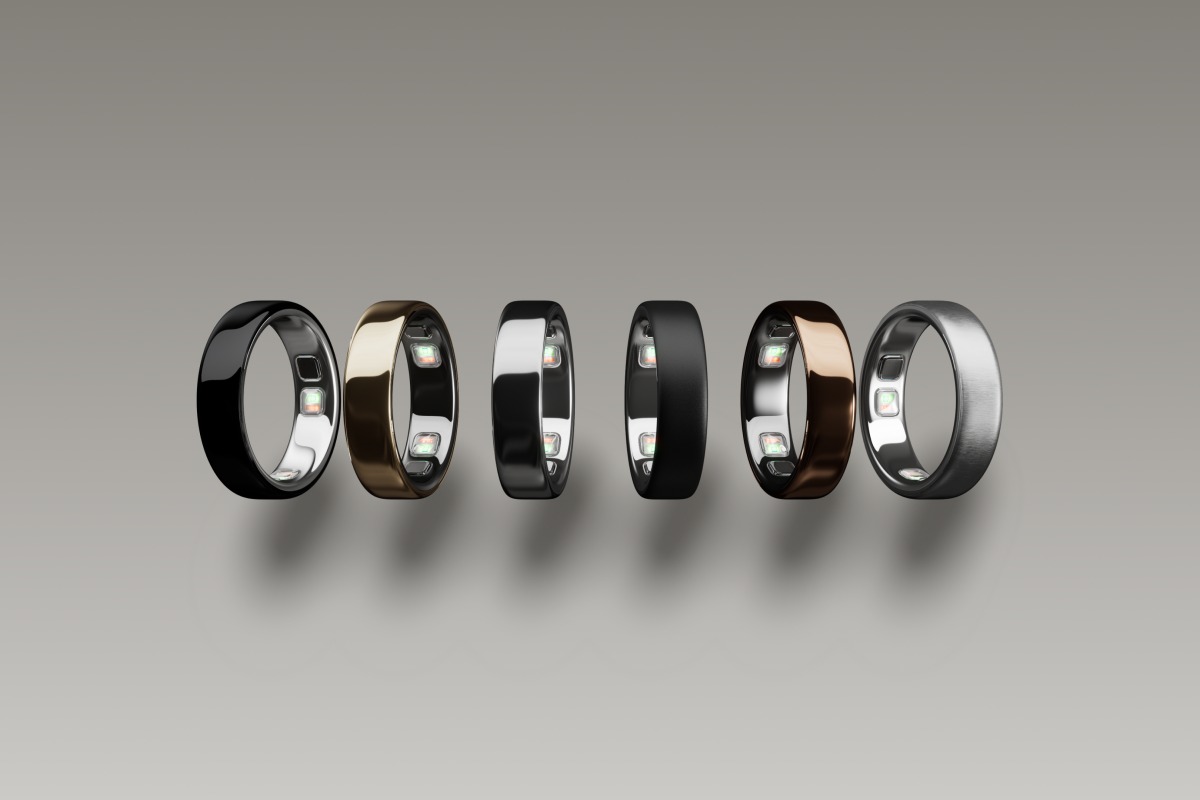
Smart ring maker Oura is facing a proposed class-action lawsuit alleging that the company has deceived consumers by exaggerating the accuracy of its sleep tracking features. The lawsuit, filed by Clarkson Law Firm in San Francisco, claims that Oura rings do not measure the necessary physiological signals to assess sleep quality or determine sleep stages. Instead, the suit alleges, the device relies on AI-generated estimations that are no more accurate than a coin toss.
Consumers Raise Doubts Over Oura’s Sleep Tracking
The legal action stems from years of user dissatisfaction shared online. Many Oura users have reported experiences where they felt they had a poor night’s sleep, only for the Oura ring to report optimal sleep quality. This has led to skepticism about the device’s ability to genuinely monitor and identify sleep cycles.
The lawsuit highlights Oura’s marketing, stating that the company sells its rings for around $300, explicitly promoting their ability to track sleep and monitor sleep cycles. The plaintiffs argue that Oura claims its ring can detect what is typically only visible in hospital sleep labs, including four distinct sleep stages.
“Oura claims to do more than just measure heart rate or body temperature; it claims to accurately determine the wearer’s sleep stage—something that, in reality, requires electrodes on the scalp and sensors on the eyes, achievable only in a hospital or other clinical setting,” the lawsuit states. Despite this, Oura has allegedly marketed its smart ring as “built for accuracy” and claimed it provides “unparalleled accuracy.”
According to the lawsuit, Oura previously told consumers its ring achieved a 79% accuracy rate for sleep measurement. More recently, the company has claimed a 95% accuracy rate for sleep staging when compared to clinical sleep labs. The plaintiffs contend that Oura cannot truly measure sleep or sleep cycles because “sleep occurs in the brain, not the finger.”
Oura Responds to Allegations
Ryan Clarkson, co-founder and managing partner of Clarkson Law Firm, expressed concern over the misinformation. “When people rely on a device to help them make health-related decisions, misinformation cannot be tolerated,” Clarkson stated in a press release. “Oura users believe the numbers on the screen reflect reality. People plan their daily lives, interpret their body’s feelings, and even plan their lifestyles based on the inaccurate data these devices provide.” He added that marketing an inaccurate sleep tracker as precise and reliable is dangerous, as people alter their behavior based on such claims.
The lawsuit seeks to prevent Oura from continuing to deceive consumers with false advertising and from claiming capabilities its wearable devices cannot deliver. The plaintiffs are also requesting injunctive relief to stop misleading descriptions of the product’s abilities and compensation for consumers who purchased the product based on these alleged false claims.
In response, an Oura spokesperson defended the company’s scientific research and accuracy claims. “Oura Ring, like other consumer sleep wearables, uses multiple physiological signals to estimate sleep stages, including heart rate, heart rate variability, movement, respiration, and body temperature,” the spokesperson said. They cited peer-reviewed scientific research indicating that different sleep stages are associated with distinct physiological changes that can be reliably used for classification.
Oura emphasized that its ring is not a medical device and not a substitute for clinical sleep studies. However, the company stated that its sleep staging feature has been validated in multiple studies against polysomnography (PSG), considered the gold standard in sleep research. Oura also mentioned that third-party studies support its accuracy claims and that the company openly discloses the mechanisms and metrics used for its sleep staging results.
The company concluded by stating that it denies the allegations in the lawsuit and will “defend itself vigorously in the appropriate legal proceeding.”