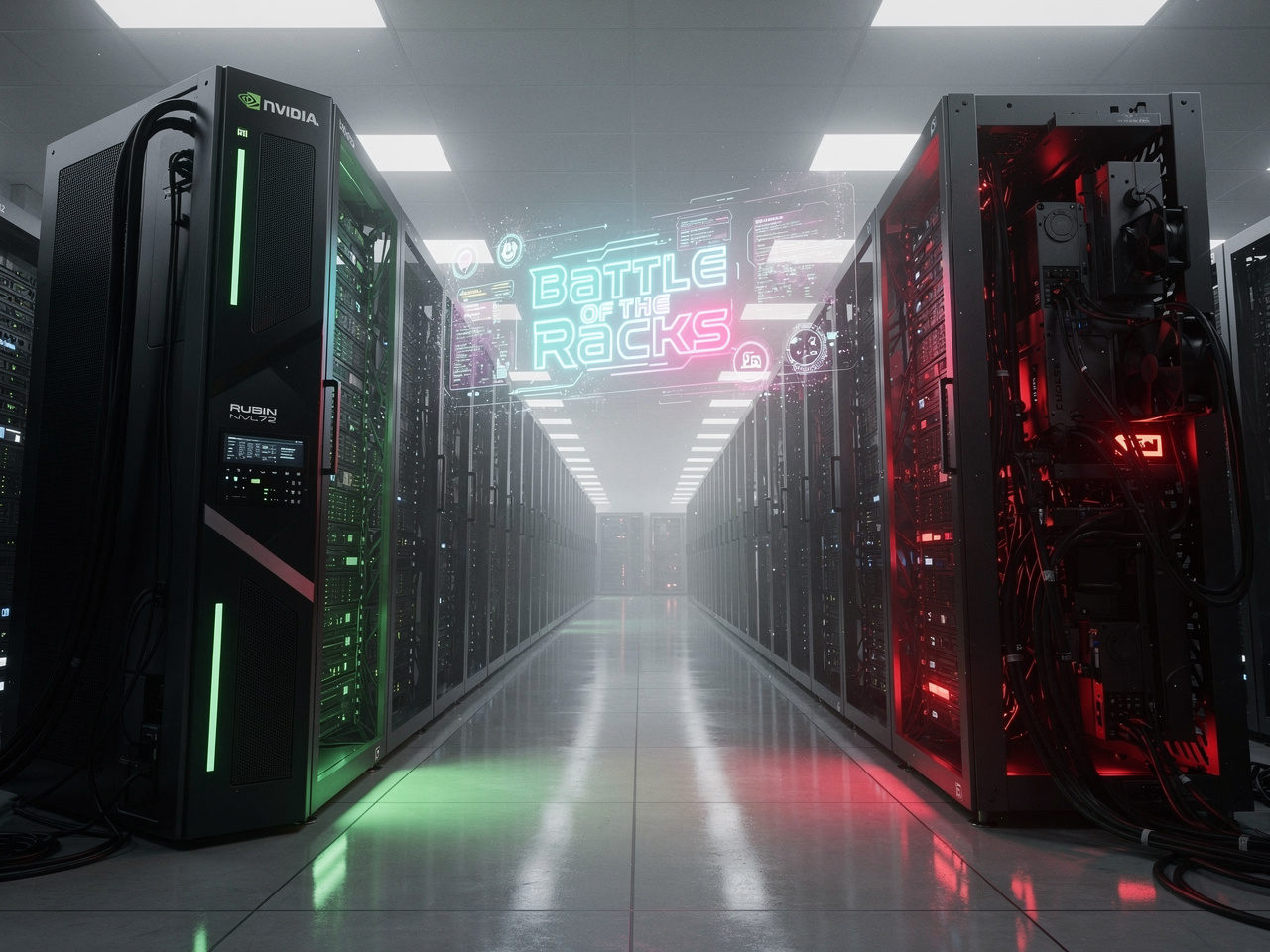
In 2026, the AI war is no longer fought with individual chips; it is fought with racks. As Large Language Models (LLMs) scale toward 100 trillion parameters, the “unit of compute” has shifted to the full-rack architecture.
Here is how the two titans of 2026—NVIDIA and AMD—compare in the race for “Planetary Scale” AI.
1. NVIDIA Rubin NVL72: The Optical Speed Demon
The Rubin NVL72 is the successor to the Blackwell generation. Its primary weapon is Light. By adopting the OCI MSA (Optical Compute Interconnect) standards, NVIDIA has effectively replaced copper with silicon photonics.
-
Interconnect: OCI Optical Link (6th Gen NVLink).
-
Networking: 1.6T InfiniBand/Ethernet.
-
Cooling: 6th Gen Liquid Cooling (Direct-to-Chip).
-
The “Secret Sauce”: Co-packaged Optics (CPO). By moving the optical engine inside the chip package, NVIDIA has reduced latency to near-physical limits.
2. AMD Helios: The Memory Monster
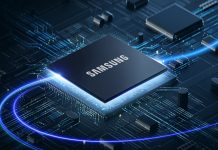
The AMD Helios platform is built on the philosophy of “Total Memory Dominance.” By partnering with Samsung, AMD has equipped its Instinct MI455X GPUs with HBM4, providing a bandwidth that NVIDIA struggled to match at launch.
-
Interconnect: Infinity Fabric 5.0 (Enhanced for Rack-Scale).
-
Networking: Ultra Ethernet Consortium (UEC) Standard.
-
Cooling: Hybrid Liquid/Air optimized for High-Density Racks.
-
The “Secret Sauce”: Samsung HBM4 (3.3 TB/s). With 13 Gbps speeds, Helios can feed data to its “Venice” EPYC CPUs and MI455X GPUs faster than any previous architecture.
Head-to-Head Comparison: 2026 AI Infrastructure
| Feature | NVIDIA Rubin NVL72 | AMD Helios (MI455X) |
| Primary GPU | Rubin R100 | Instinct MI455X |
| Memory Tech | HBM4 (Custom) | Samsung HBM4 (1c DRAM) |
| Max Bandwidth | ~3.0 TB/s | 3.3 TB/s |
| Interconnect | Optical (OCI MSA) | Electrical/Optical Hybrid |
| CPU Architecture | Vera (Arm-based) | 6th Gen EPYC “Venice” |
| Ecosystem | Vertical/Proprietary | Open Standard/Turnkey |
| Best For | Ultra-Low Latency Training | Massive Inference & RAG |
Strategic Analysis: Which Should You Choose?
Choose NVIDIA Rubin NVL72 if:
-
You are training Multimodal Frontier Models (GPT-6 class) where every nanosecond of latency costs millions in compute time.
-
You are already deeply integrated into the CUDA ecosystem and use NVIDIA’s full-stack software.
-
Physical space is a premium—the optical links allow for more flexible data center layouts.
Choose AMD Helios if:
-
You prioritize Memory Bandwidth for massive-scale Inference and Retrieval-Augmented Generation (RAG).
-
You want an Open Ecosystem that avoids “vendor lock-in,” utilizing the OCI MSA and Ultra Ethernet standards.
-
You need the raw x86 power of the “Venice” EPYC processors for complex pre-processing of AI data.
The Verdict for 2026
The NVIDIA Rubin NVL72 remains the king of Innovation Velocity, pushing the physical boundaries of light. However, the AMD Helios, backed by Samsung’s HBM4, has closed the gap significantly, offering a “Memory First” approach that makes it the most cost-effective solution for high-throughput AI inference.