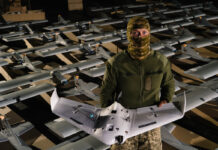
The order issued by Defense Minister Mykhailo Fedorov on March 11, 2026, effectively introduces the principles of data-driven management into the Ukrainian military. This marks the end of the era of paper applications and subjective decisions when purchasing weapons.
The state is transitioning to a model where, instead of specifying the names of specific drone models, the General Staff only provides the necessary technical parameters, such as flight range, payload capacity, and resistance to electronic warfare. Who exactly will receive the contract is now decided not by officials, but by an algorithm that analyzes data from the front lines.
“The transition from manual demand formation to an automated model will eliminate the ‘zoo’ of ineffective solutions that the military is forced to refine with their own hands in the trenches. The state will only purchase what actually flies, hits targets, and has proven its effectiveness on the front lines,” says Fedorov.
Data sources for decision-making
Each drone’s rating is determined by synchronizing five key digital platforms:
-
eBalls are the main tool for verifying hits. This is where statistics on actual effectiveness are collected: how many sorties ended in the successful destruction of the target.
-
DOT-Chain and Brave1 Market analyze the “voice of the military.” If units spend their own funds on a particular model, this is the best indicator that the drone is reliable.
-
DELTA and Mission Control provide operational analytics. They show how the drone behaves in active electronic warfare conditions and how well it integrates into the overall combat management system.

New budget allocation formula
To maintain a balance between frontline stability and the development of new technologies, the budget was divided in an 80/20 ratio:
-
80% — efficiency (scaling). These funds are allocated exclusively to products that have the highest ratings in the eBaly system. This ensures that the army receives a mass-produced and proven product.
-
20% — innovation (venture approach). Funds for new developments and startups. This allows us to purchase small batches of new drones for testing in combat conditions without waiting for months of testing.
What problems does it solve?
-
The state will stop purchasing dozens of different models with identical characteristics, which cannot be serviced in a standardized manner.
-
Anti-corruption safeguard. Since the algorithm generates demand based on data, officials lose the opportunity to lobby for the interests of specific manufacturers.
-
Incentive for manufacturers. Now, the only way to secure a large contract is through real technological improvements, not connections in the corridors of power. If a drone flies poorly, the system will simply “cross it off” the purchase list.
This decision effectively transforms drone procurement into a transparent marketplace where the winner is the one who delivers the best results on the battlefield.