Microsoft’s latest patent introduces the concept of antenna array integration inside phone screen glass, aiming to improve wireless signals without adding thickness to smartphones. This novel design could pave the way for enhanced antenna layouts in future devices like the Surface Phone.
Integrating Antenna Arrays Within Screen Glass
According to the patent published by the US Patent and Trademark Office on November 12, Microsoft suggests embedding antenna arrays directly inside the display glass layer. This approach frees up internal space in devices where room is traditionally very limited, allowing larger antennas without increasing phone thickness.
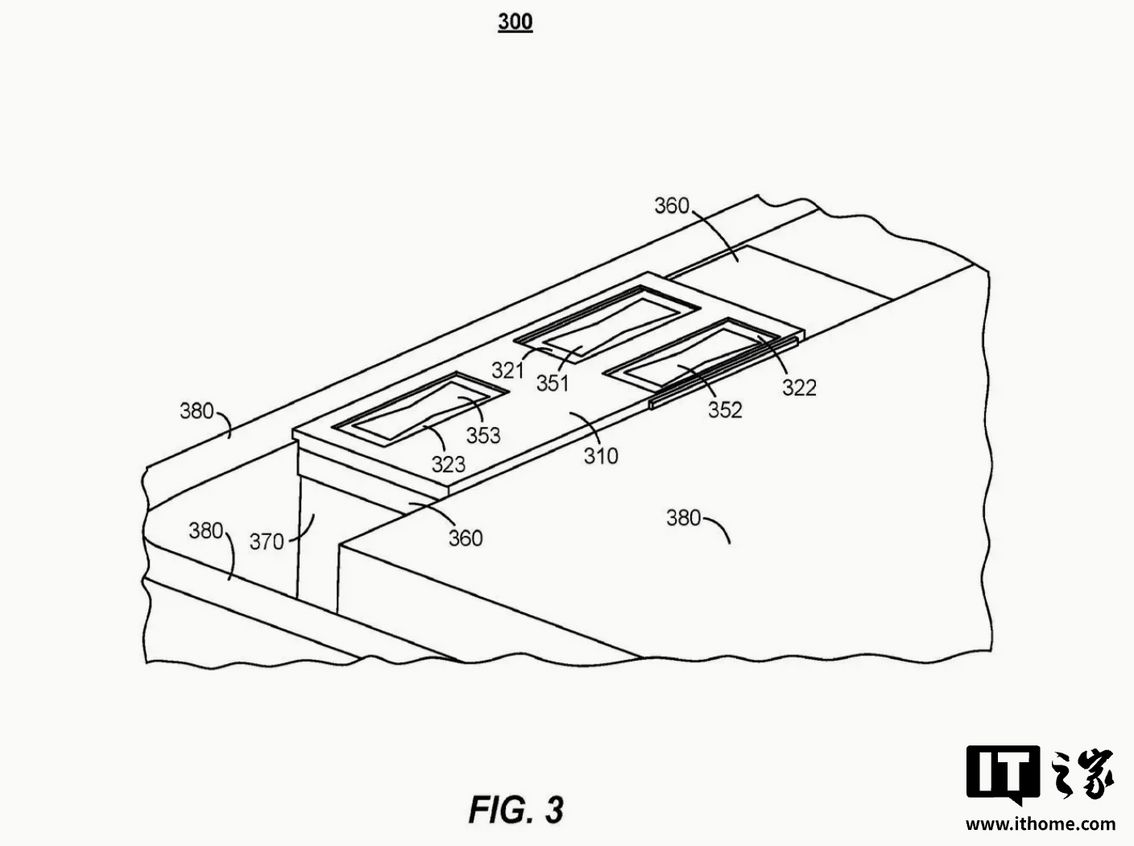
Typically, manufacturers reduce antenna sizes, share antennas across wireless features, or even remove mmWave and ultra-wideband (UWB) capabilities to save space. Microsoft’s design leverages the screen glass by creating a locally thinned area on its back, into which antenna layers are embedded. The front surface remains flat and smooth, avoiding visible or tactile imperfections for users.
The patent describes an example where the thinned glass section housing the antennas is about 0.4 millimeters thick compared to 1.2 millimeters elsewhere. Additional design elements like black light-blocking layers can hide the antennas from view on the screen’s front.
Enhanced Signal Performance and Structural Reliability
This integration could accommodate phased array antennas for UWB, consisting of multiple small elements that electronically steer radio waves without mechanical movement, enabling directional beamforming. The patent also details structural reinforcements including epoxy resin or liquid adhesives to secure antenna components, along with foam or gaskets to create small air gaps preventing signal degradation from adhesive coverage.
Microsoft envisions this technology not only boosting short-range wireless performance in smartphones and tablets but also enabling advanced 3D radar applications in some implementations. While the idea remains at the patent stage, it offers a promising direction that might feature in upcoming Surface Phone models.