Dongchedi content changes have sparked rumors about major shifts in the platform’s testing and publishing rules. The company has responded to clarify inaccuracies circulated online, affirming some content was AI-produced and not verified by the platform.
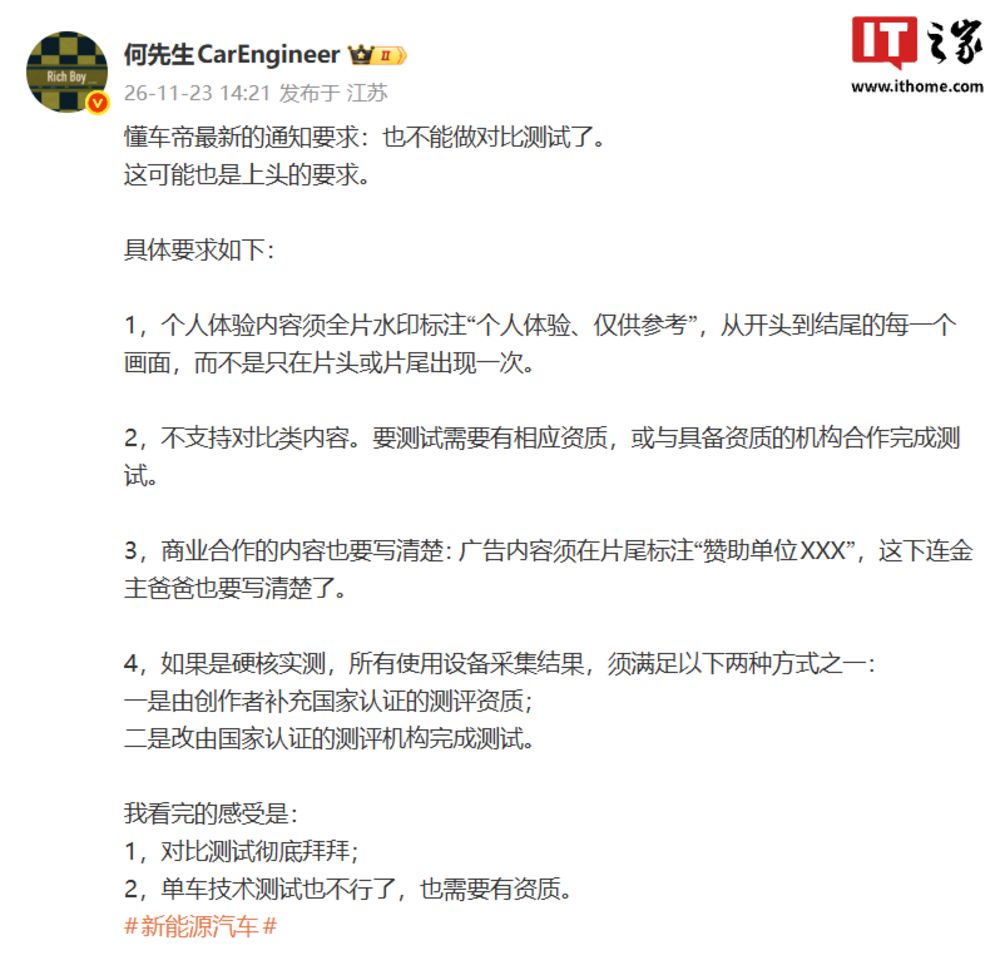
Recently, a blogger claimed that Dongchedi internally imposed four new rules on public testing content, including restricting comparative content and requiring qualifications to post test results. However, Dongchedi’s content operations team stated these changes align strictly with the “Network Evaluation Activity Specification.” They emphasized that reports of “major content overhauls” and widespread industry impact are largely false.
Regulatory Context and Industry Oversight
In September, China’s Ministry of Industry and Information Technology (MIIT) highlighted efforts to curb irrational competition in the automotive sector, especially in smart connected new energy vehicles. Guo Shougong, Director of MIIT’s Equipment Industry Division, discussed how unfair competition leads to resource waste, disrupts market order, and stifles innovation, hindering high-quality development.
MIIT and related agencies have implemented regulatory frameworks to promote industry self-discipline, optimize supply chain management, ensure product consistency, and tackle online misinformation. These efforts have yielded positive results with more rational corporate conduct, reduction of online conflicts, and improvement in supplier payment terms.
Guo also stressed ongoing measures to normalize industry order, calling for stricter oversight of new vehicle launches and product evaluation activities, reinforcing a fair and transparent environment for automotive innovation and promotion.