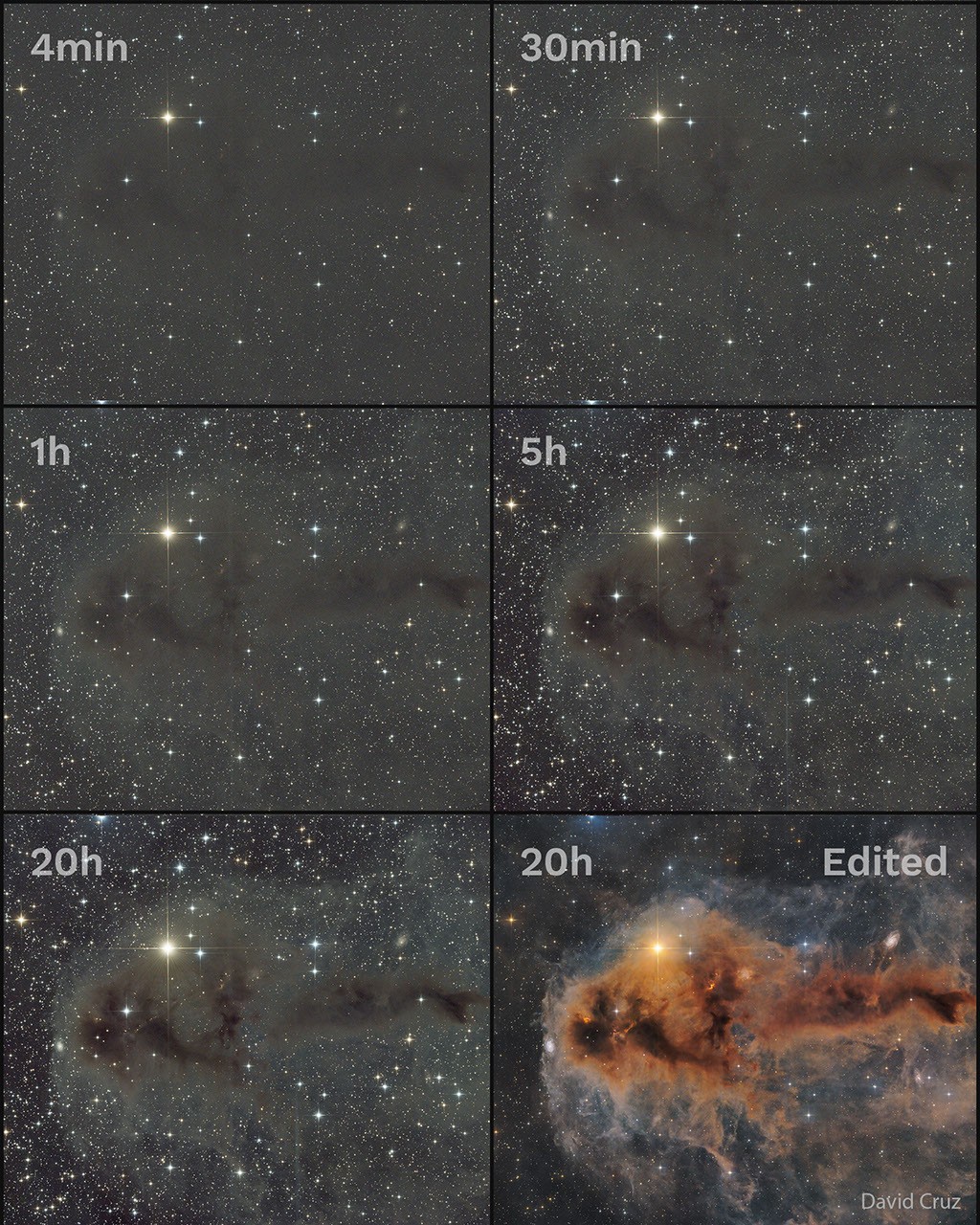
In a stunning new image, NASA scientists have unveiled the intricate beauty of Lynds 1251 (LDN 1251), a dark nebula that is a vibrant stellar nursery. This celestial object, often referred to as the ‘Rotten Fish Nebula,’ is a complex region rich with opaque interstellar dust, newly formed stars, and energetic cosmic phenomena. The detailed imagery, captured over an extended period, offers a rare glimpse into the dynamic processes that birth stars within our galaxy.
Unveiling the Darkness
Dark nebulae are vast clouds of gas and dust that are so dense they block visible light from stars behind them, appearing as dark patches against the cosmic backdrop. Lynds 1251, located in the direction of the featured image, was revealed through a patient observational approach. Initially appearing as starless regions, prolonged exposure with advanced imaging technology allowed astronomers to discern its complex structure. The final processed image, enhanced to bring out subtle colors and details, showcases the nebula’s ethereal forms and the energetic processes occurring within.
A Birthplace of Stars
Lynds 1251 is far from being a static void. This dark nebula is a dynamic stellar-forming region teeming with activity. Within its dusty embrace, young stars are igniting, their formation driven by gravitational collapse. The nebula is also characterized by:
- Opaque brown-appearing interstellar dust that obscures visible light.
- Young stars in various stages of development.
- Energetic shock waves emanating from stellar activity.
- Powerful stellar winds carving through the cosmic gas and dust.
- Collimated jets of material being ejected from young stars.
These elements combine to make Lynds 1251 a crucial site for understanding star formation and the evolution of interstellar matter.
Source: NASA