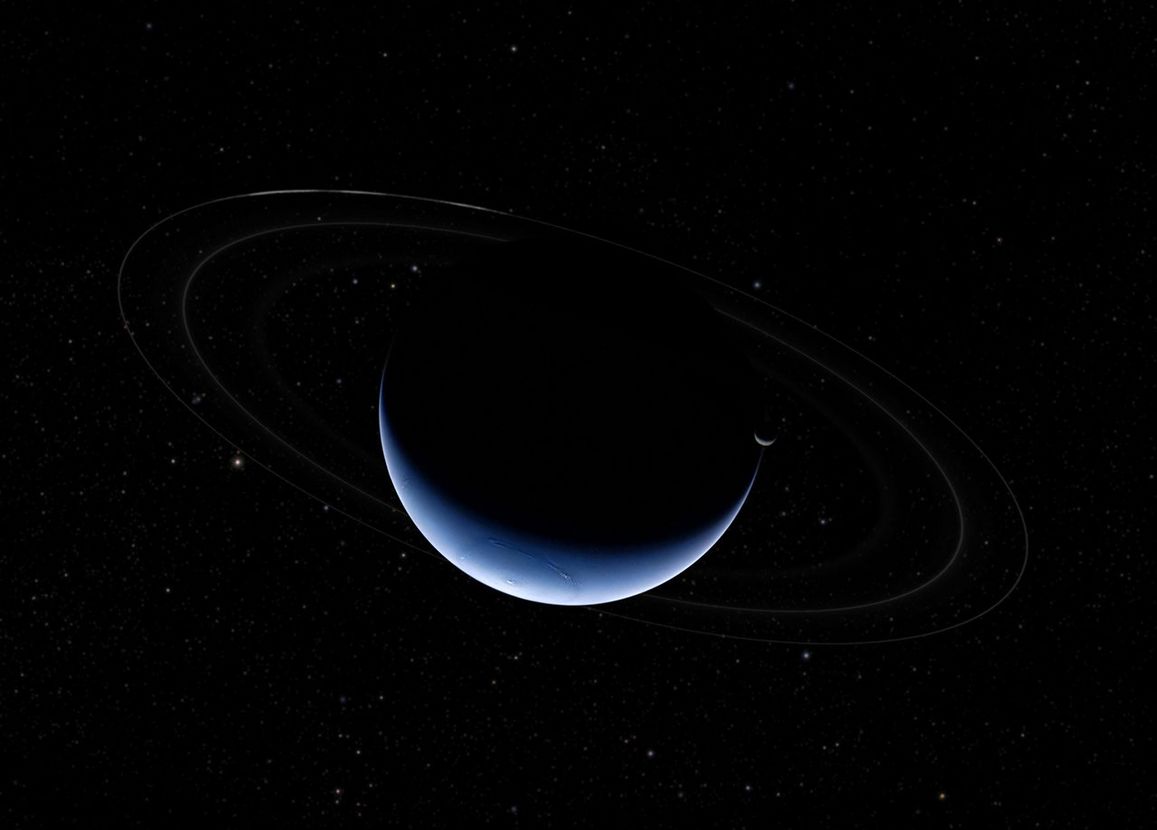
In August 1989, NASA’s Voyager 2 spacecraft conducted a historic flyby of Neptune, the outermost giant planet in our solar system. The images and data transmitted by the probe provided an unparalleled glimpse into the atmosphere, moons, and rings of this distant ice giant. This mission remains critically important to planetary science, as Voyager 2 is still the only spacecraft ever to have visited Neptune.
Voyager 2’s Unique Discoveries and Imagery
During its closest approach on August 25, 1989, Voyager 2 captured detailed images of Neptune itself, its largest moon Triton, and the planet’s faint ring system. These observations revealed several significant features:
- Neptune’s southern pole was observed to be covered by cirrus clouds and a dark band.
- An atmospheric vortex with swirling clouds was detected directly above the pole.
- The planet’s ring system was imaged for the first time, showcasing three distinct bright arcs.
- Images presented Neptune and its moon as thin solar crescents, viewed from an interplanetary perspective.
Voyager 2’s Status Today
Nearly four decades after its landmark journey past Neptune, the Voyager 2 spacecraft continues its voyage through interstellar space. The wealth of data it provided offers a unique window into the most remote corners of our solar system, and Voyager 2’s explorations remain foundational to our understanding of the ice giants.