Coolbyke has acknowledged a potential safety issue with its 10 Ultra charger (model AD1204U) that could lead to damage to low-voltage devices. The company confirmed that in rare instances, the protocol chip might fail to respond, potentially causing abnormal voltage output when charging devices like earphones, keyboards, and mice.
Addressing the Fault
The problem came to light following a surge of user complaints on social media platforms, notably on Xiaohongshu, where users reported their 10 Ultra chargers allegedly damaging an iPhone 16 Pro’s power chip and a Nintendo Switch 2. These posts garnered significant attention, with engagement reaching over 100,000 interactions.
Further reports from other users indicated that after prolonged power-on periods, the charger’s power display would freeze, and the port would cease outputting power without resetting the voltage. Connecting a voltage-sensitive device in this state could result in irreparable damage.
Discussions on forums like NGA suggested that similar issues may have been occurring sporadically since late 2024. Industry sources cited by blogger “Cha Ping Jun” pointed to a firmware bug within the charger’s MCU (Microcontroller Unit) as the root cause. While the earliest documented case linked to this MCU dates back to January 2026, it was noted that other brands using the same MCU might also be susceptible, though no user damage reports have surfaced for those products yet.
Coolbyke’s Response and Timeline
Coolbyke officially responded to “Cha Ping Jun,” clarifying that the first confirmed user damage case occurred in June 2026, not January. The company explained that the limited initial feedback samples made it difficult to replicate the fault, delaying the identification of the problem logic and the subsequent development of a fix.
For users whose damages have been verified, Coolbyke has proceeded with assessments and compensation through its standard after-sales process. However, due to a recent influx of claims regarding alleged charger-related damage, the company stated it needs to individually inspect each submitted device to establish a causal link between the reported damage and the charger’s malfunction.
Technical Details and Mitigation
Normally, a charger negotiates power output with a connected device through a “handshake” process. It adjusts the voltage supplied (e.g., 5V for earphones, 9V for smartphones) based on the device’s request. When the protocol chip is unresponsive due to the firmware defect, the port might remain at its maximum 20V output without proper negotiation, posing a risk of overvoltage damage to low-voltage devices.
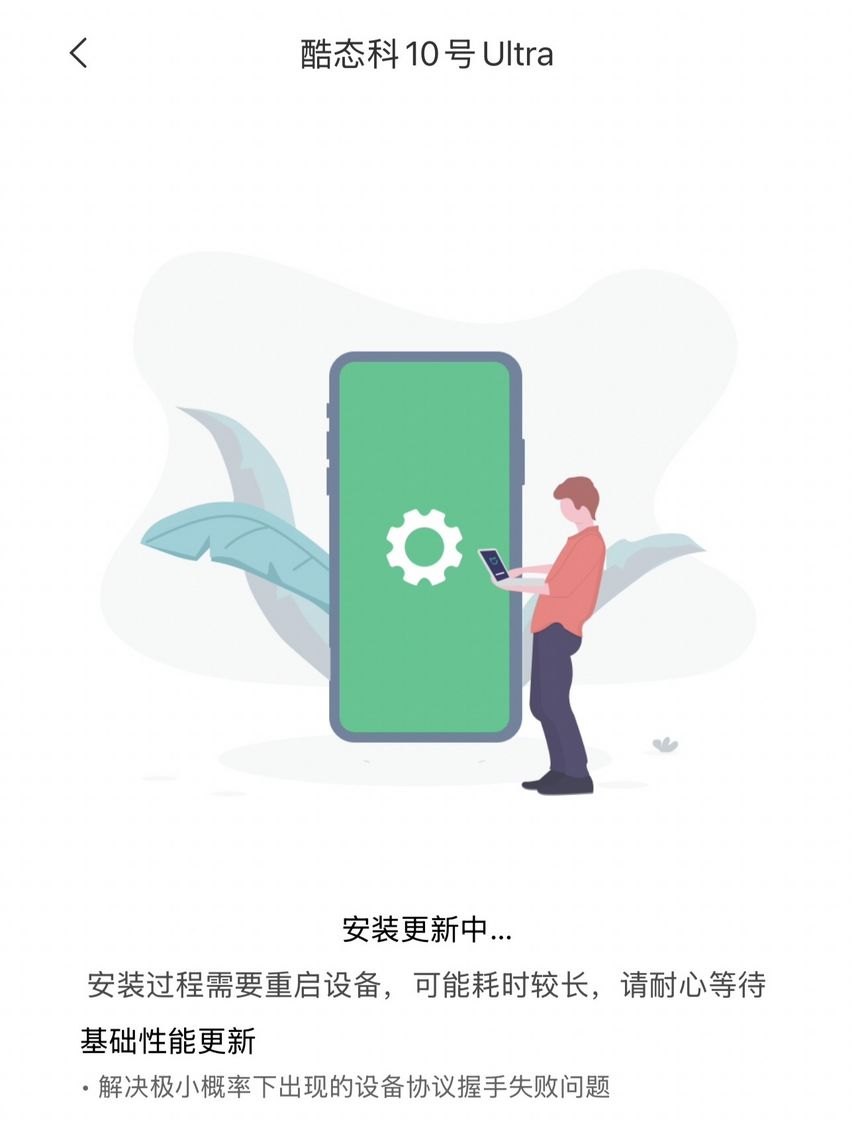
Coolbyke emphasized that devices designed to handle 20V or higher, such as most smartphones and laptops, are not affected by this bug and face no risk of damage. The company strongly advises users to update the charger’s firmware as soon as possible. This can be done via Bluetooth connection through the Mijia App, updating to the latest, patched version.
Users experiencing any unusual behavior with their Coolbyke 10 Ultra charger are encouraged to contact their point of purchase’s after-sales customer service for assistance.