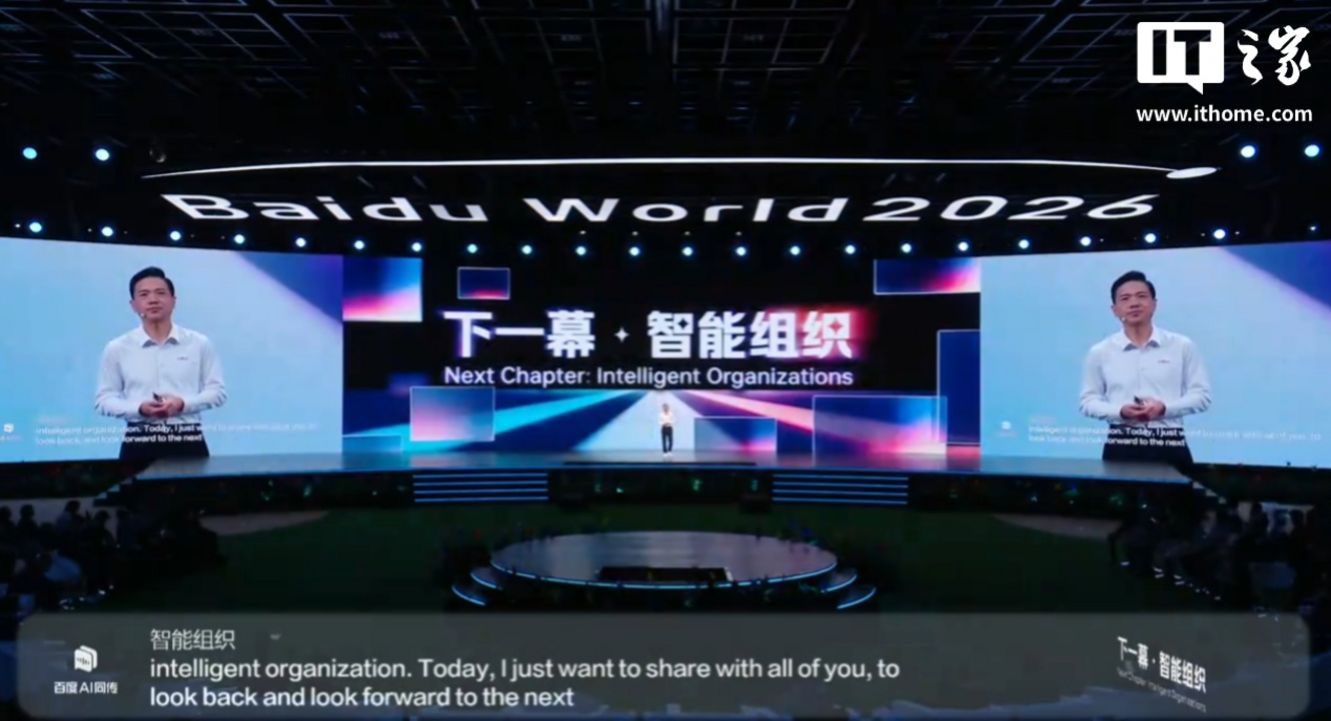
Robin Li, co-founder and CEO of Chinese tech giant Baidu, has voiced concerns about a potential ‘AI bubble,’ emphasizing that significant investments in artificial intelligence risk outpacing real-world application and demonstrable results.
AI Bubble Risk: Investments Outpacing Practical Outcomes
During a discussion titled “Building an Open and Inclusive AI Innovation Ecosystem” at the APEC Business Advisory Council 2026 summit in Shenzhen, Li highlighted that despite massive investments in computing power and infrastructure, the practical application of advanced AI solutions has not yet met expectations.
He cautioned that if the applied level of AI fails to achieve significant breakthroughs, the industry faces the risk of an ‘AI bubble.’
Optimism for AI’s Future Hinges on Organizational Evolution
Despite these reservations, Li remains optimistic about the long-term trajectory of AI development, predicting that Baidu’s AI-related revenue will continue to grow.
However, he stressed that unlocking AI’s full economic potential requires more than just technological advancements like chips, cloud services, models, and applications. Li emphasized the crucial role of complementary organizational capabilities, drawing an analogy to the electricity revolution. Just as advanced technology alone wasn’t enough to realize economic value without adaptive organizational changes, AI’s true impact depends on similar shifts.
Baidu World Conference 2026 attendees were previously informed by Li that the next stage of AI development would be the ‘intelligent organization.’ As reported by IT Home, Li stated on November 12th:
“If AI is the new electricity, then the intelligent organization is the new factory of the AI era, the true place where productivity growth occurs. Only when organizational methods that match the new capabilities of AI are implemented will productivity significantly increase, and the economy accelerate its growth.”.
This statement underscores a critical point: technological progress in AI alone does not guarantee economic growth. A comprehensive transformation of organizational structures and processes is essential to effectively leverage the potential of these new technologies.
Li’s perspective reflects a broader industry debate about the balance between AI innovation and practical implementation. While developers are actively creating more powerful AI models, a key challenge remains their integration into real business processes and the creation of new organizational work structures that can maximize AI’s benefits.
The necessity of ‘intelligent organizations’ implies that companies must re-evaluate their structures, culture, and management methods to become more agile, adaptive, and capable of rapid AI adoption and utilization. This could involve retraining staff, altering decision-making processes, and establishing new AI-focused departments.
Ultimately, the future success of AI hinges not only on technological breakthroughs but also on the capacity of businesses and society to adapt to the new realities these technologies are creating.
Source: IT Home (ithome.com)