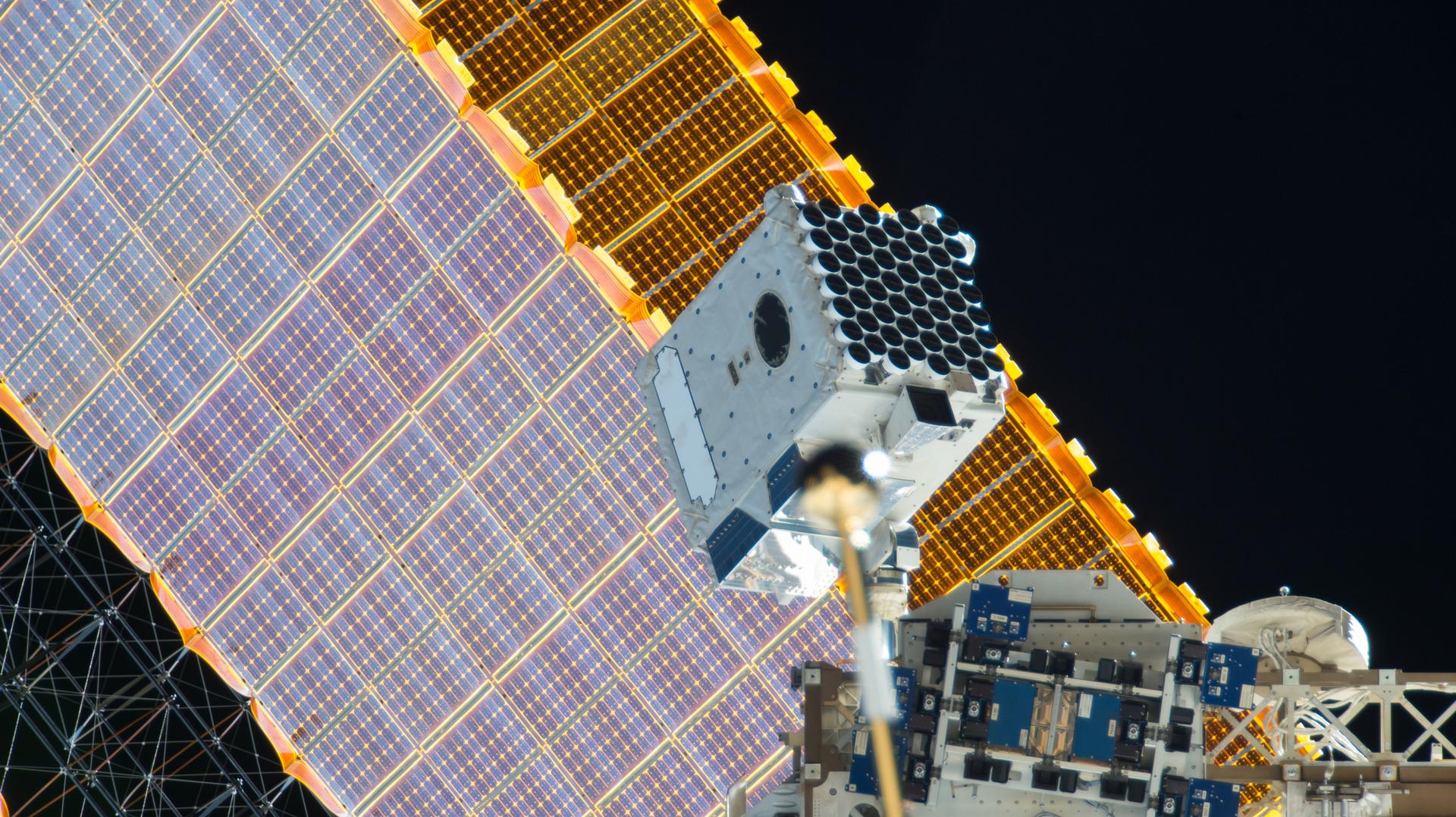
After an illustrious six-and-a-half-year mission, NASA’s Neutron star Interior Composition Explorer (NICER) telescope aboard the International Space Station has concluded its science operations. The mission, which began in 2017, delved into the extreme physics of neutron stars, the densest objects in the universe, and made significant contributions to our understanding of black holes and active galaxies. The NICER team is now focused on archiving its extensive X-ray data and preparing the telescope for de-orbit.
Mission Highlights and Challenges
NICER’s primary mission, originally slated for 18 months, far exceeded expectations, delivering groundbreaking insights into the enigmatic nature of neutron stars. These stellar remnants, born from the explosive death of massive stars, pack immense amounts of matter into incredibly small volumes, offering a unique laboratory for studying physics under conditions impossible to replicate on Earth. Beyond its core objectives, NICER also successfully demonstrated the potential of using X-ray pulsars for precise spacecraft navigation, a technology that could be crucial for future deep-space missions, including journeys to Mars and beyond.
The mission faced operational hurdles in its later stages. In June 2025, a malfunction in an internal motor limited NICER’s ability to swivel side-to-side, hindering its capacity to track celestial targets. Despite extensive investigations, including external camera assessments and internal troubleshooting, the cause was attributed to an internal motor failure. Prior to this, in April 2025, repairs were made to address a light leak that had affected daytime observations. Spacewalking astronauts installed patches to cover damaged thermal shields, restoring some daytime measurement capabilities.
Beyond Space: Terrestrial Applications and Future Archiving
NICER’s technological innovations have also found applications on Earth. The sophisticated testing equipment developed for NICER before its launch has been adapted for use in prototype portable CT scanners, advanced materials analysis systems, and other beneficial terrestrial technologies. As science operations cease, the focus shifts to preserving NICER’s comprehensive 8-year archive of X-ray observations, ensuring that this valuable scientific legacy remains accessible for future research. The process of decommissioning and detaching the telescope from the International Space Station will follow, marking the end of an era for this pioneering X-ray observatory.
Source: NASA