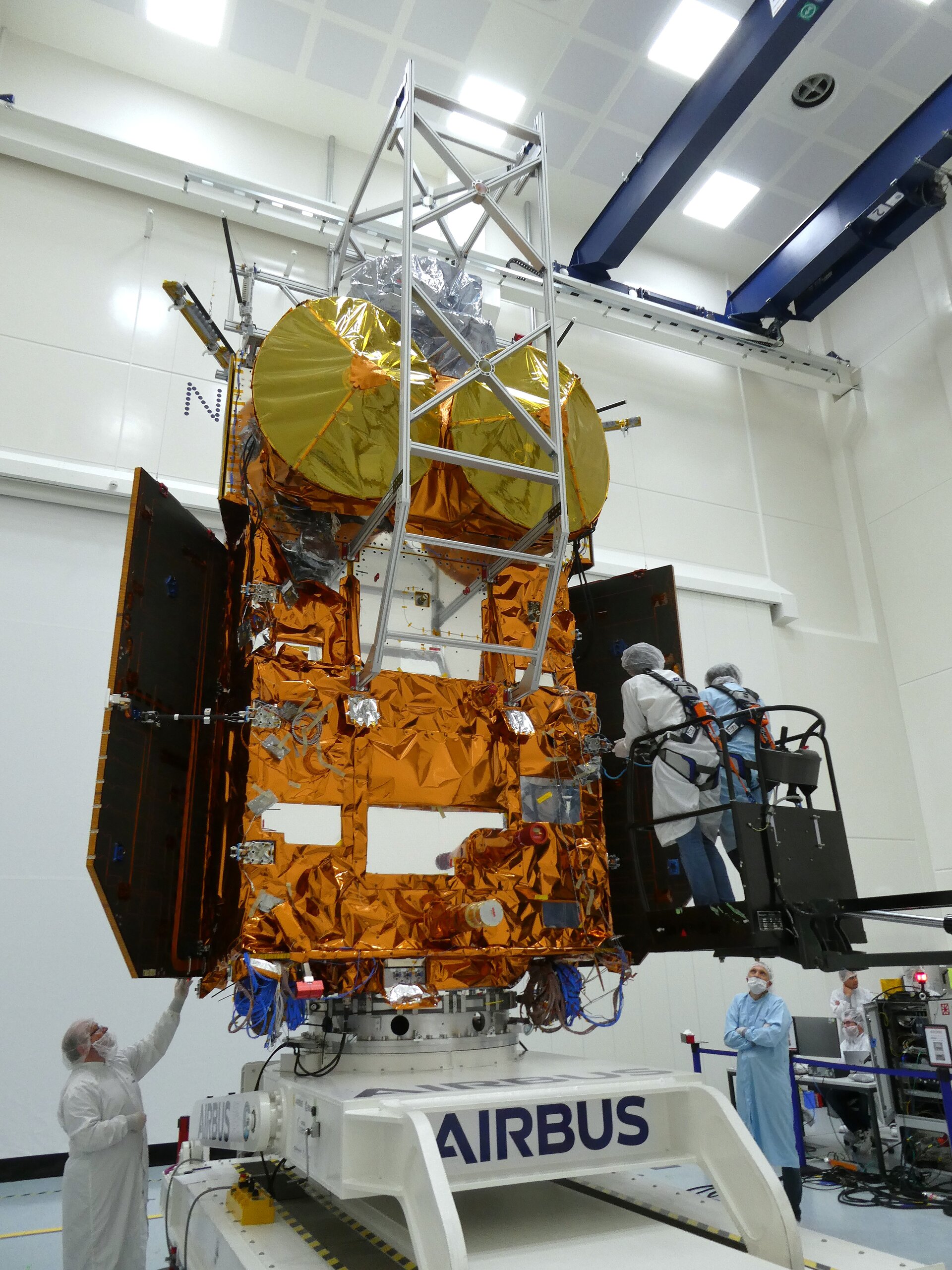
Europe’s next-generation ice-monitoring satellite, CRISTAL, has successfully unfurled its solar wings, a critical step as it moves into rigorous testing to prepare for its mission observing Earth’s polar regions. Assembling the satellite marked a significant milestone, and engineers are now subjecting its systems to demanding checks, including a vital solar panel deployment test. This advancement brings CRISTAL closer to its launch, targeted for late 2027 to early 2028, where it will provide essential data on sea-ice thickness, snow depth, and ice-sheet elevation, contributing vital insights into climate change and supporting polar operations.
Key Tests Pave the Way for Space Readiness
Engineers recently completed the assembly of the CRISTAL satellite at Airbus facilities in Germany. Following this, the focus shifted to comprehensive testing, with a standout moment being the successful deployment test of its solar panels. This test is crucial for verifying the intricate mechanisms and software sequences that will ensure the satellite can effectively generate power once in orbit. In parallel, CRISTAL underwent checks to confirm its fit and secure release from its launch adapter, the component that connects it to the rocket and ensures its precise injection into space. These hands-on activities are complemented by ongoing qualification reviews of the satellite’s equipment and instruments.
Rigorous Environmental Testing and Mission Objectives
CRISTAL is set to embark on an extensive environmental test campaign at the European Space Agency’s establishment in the Netherlands. This phase is designed to simulate the extreme conditions of liftoff and space, ensuring the satellite can withstand the harsh environment it will encounter. As the first Copernicus Sentinel Expansion mission to orbit, CRISTAL, short for Copernicus Polar Ice and Snow Topography Altimeter, will house a sophisticated dual-frequency radar altimeter and a microwave radiometer. These instruments will meticulously measure and track changes in ice topography for at least two decades, continuing and enhancing the vital data records initiated by previous missions like ESA’s CryoSat. This sustained observation will be invaluable for understanding the rapid changes in polar regions and their global ramifications, supporting everything from maritime activities to climate research.