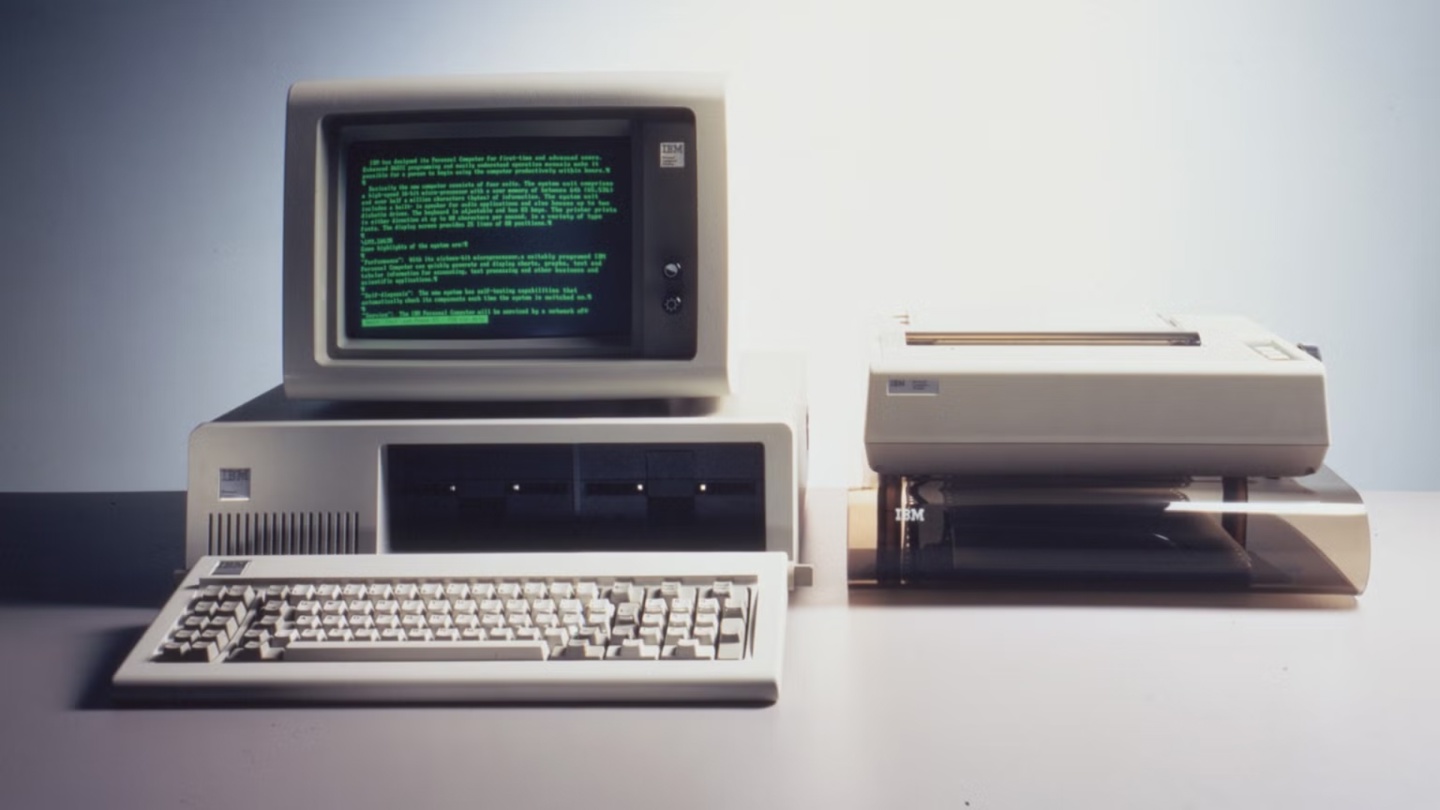
Decades after its creation, the iconic Ctrl+Alt+Del key combination, once called a ‘mistake’ by Microsoft co-founder Bill Gates, remains a crucial entry point for security functions in Windows 11. This enduring legacy highlights a fascinating intersection of historical design choices and modern operating system architecture.
A Relic from 1981
The Ctrl+Alt+Del sequence has a history stretching back 45 years, originating not in the world of operating systems as we know them today, but in the early days of personal computing. In 1981, IBM engineer David Bradley designed this shortcut for the very first IBM PC. Its original purpose was not security, but utility: to quickly reboot a frequently crashing computer without having to endure the lengthy boot-up sequence and its associated Power-On Self-Test (POST).
Interestingly, the third key was not initially planned to be Delete. Bradley had intended to use the Esc key, but later opted for Delete. On the original IBM PC keyboard, the Ctrl and Alt keys were positioned on the left side, while the Delete key was part of the numeric keypad, making the combination somewhat awkward to press.
The Accidental Security Key
Microsoft adopted the Ctrl+Alt+Del combination for its Windows NT 3.1 release in 1993. The company needed a way to ensure users were interacting with the genuine system login screen and not a fraudulent imitation designed to steal passwords. This required a ‘Secure Attention Sequence’ – a key combination that no regular application could intercept.
Ctrl+Alt+Del fit the bill perfectly. It was a combination that wasn’t commonly used by everyday software and could be registered by the Winlogon process. This allowed Windows to present a protected ‘Secure Desktop’ before displaying login options such as password prompts, PIN entry, or smart card authentication.
Bill Gates’s Longstanding Regret
Despite its functional utility in the early Windows era, Bill Gates has publicly expressed his dissatisfaction with the Ctrl+Alt+Del shortcut on multiple occasions. In 2013, speaking at a Harvard University event, Gates acknowledged that while the key combination served as a safeguard against fake login screens, he considered it an inconvenient and non-intuitive operation for the average user.
“If I could wave a magic wand, I would have changed it,” Gates reportedly said, lamenting the design. He specifically pointed to the keyboard layout of the time, suggesting that the lack of a dedicated single key for such an action was an issue. “We could have designed a single button for this. It was a mistake on the part of the IBM hardware guys and our guys,” he added.
His sentiment was echoed in 2017 when he reiterated his preference for a simpler, single-key alternative, indicating that the three-key combination was a design choice he wished could be undone.
Ctrl+Alt+Del in Windows 11 Today
Even in the age of Windows 11, which heavily emphasizes AI, touch interfaces, and modern interaction paradigms, Ctrl+Alt+Del persists. Pressing this combination in the latest Windows version still brings up the security screen, offering options to lock the computer, switch users, sign out, change a password, or launch the Task Manager.
For users who only need to access the Task Manager, Windows provides a more direct shortcut: Ctrl+Shift+Esc. This direct access bypasses the security screen, offering a quicker route for performance monitoring and application management.
The continued presence of Ctrl+Alt+Del serves as a stark reminder of how legacy design decisions can remain embedded in complex systems, even as technology rapidly evolves. It’s a testament to the enduring, albeit perhaps unintended, success of a 45-year-old ‘mistake’ that has become a fundamental part of the computing experience for millions.