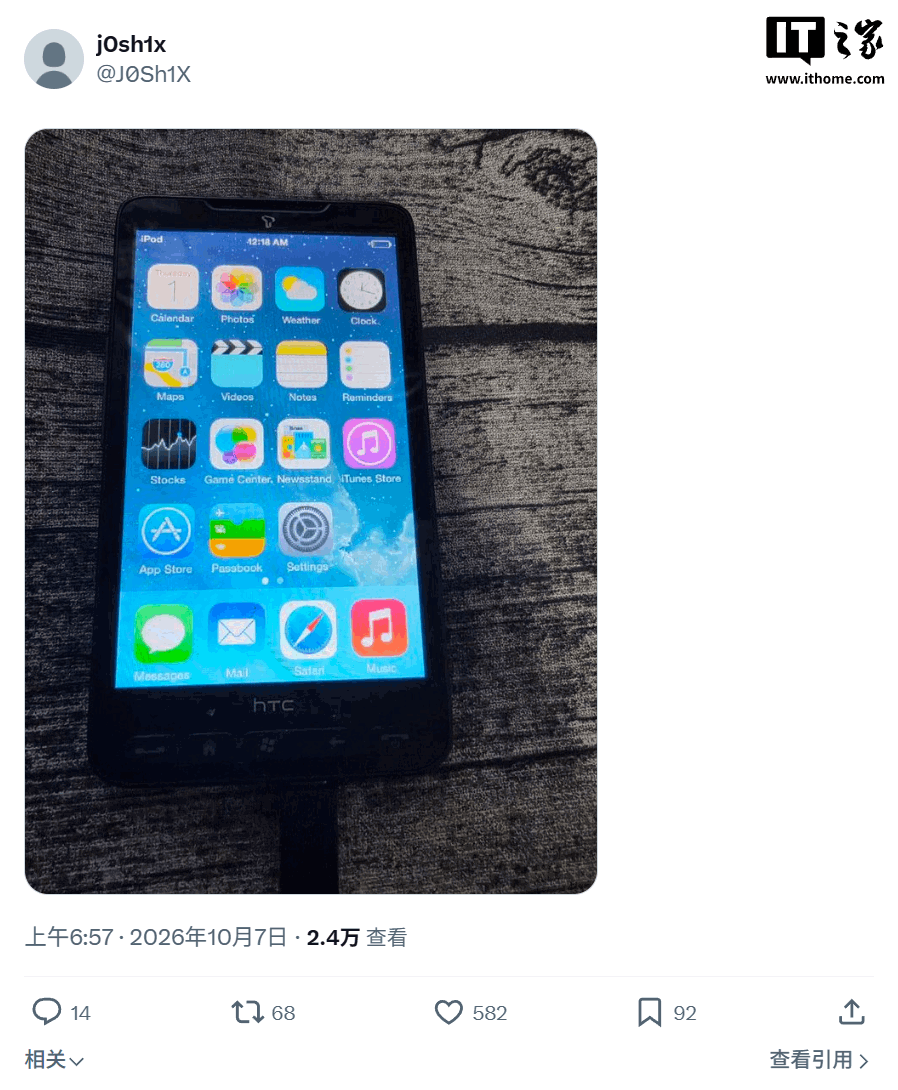
In a remarkable feat of retro-computing and dedicated development, the aging HTC HD2, a classic smartphone released in 2010, has been successfully made to run Apple’s iOS 7 operating system. Developer j0sh1x has unveiled this impressive project, which involved porting the XNU kernel and associated hardware support code directly onto the HD2’s hardware.
A Blast from the Past, Reimagined
The HTC HD2, codenamed HTC Leo, was a powerhouse for its time, featuring a Qualcomm QSD8250 processor. This new project isn’t about emulation; it’s a genuine hardware port. J0sh1x has managed to get the iOS user-space components running on the HD2, with the touchscreen functionality reportedly working.
Under the Hood: XNU and Hardware Adaptation
At the heart of this achievement is the XNU kernel, the hybrid kernel that powers macOS and iOS. While Apple maintains XNU’s source code, support for older 32-bit ARM architectures, like that found in the HD2, is now considered legacy.
The developer has created a GitHub repository, titled ‘XNU Kernel and Board Support for HTC HD2’, building upon existing work. This repository contains customized code for the HD2’s specific hardware, including adaptations for the CPU, interrupt handling, timers, and memory mapping. It also includes support for SDCC storage, MDP display output, and a specific Type 2A touch input path, along with IOKit display and HID services.
Source Code, Not a Ready-to-Flash ROM
It’s crucial to understand that the published code is primarily source code and not a complete, installable firmware package. Building a functional iOS 7 for the HD2 requires a specific Darwin/Mach-O ARM toolchain, generated XNU headers, and matching target configurations. The repository does not include Apple’s user-space components, file system, boot images, SDK, or toolchain binaries. Therefore, it cannot be considered a simple flashable iOS 7 ROM.
A Testament to the HD2’s Legacy
The HTC HD2 has long been revered in the tech community as a legendary “do-it-all” device due to its unusually open bootloader and extensive history of unofficial operating system ports. Over the years, this handset has seen unofficial versions of Windows Phone, Android, and Symbian.
This latest endeavor to run iOS 7 on the HD2 further solidifies its status as a platform for extreme customization and hardware experimentation. While the developer has provided visual demonstrations of the iOS 7 port running on the device, the open-source repository is presented as a development project rather than a stable, universally applicable solution.
The project highlights the enduring appeal of classic hardware and the incredible dedication of developers who continue to push the boundaries of what’s possible, breathing new life into devices long past their prime.