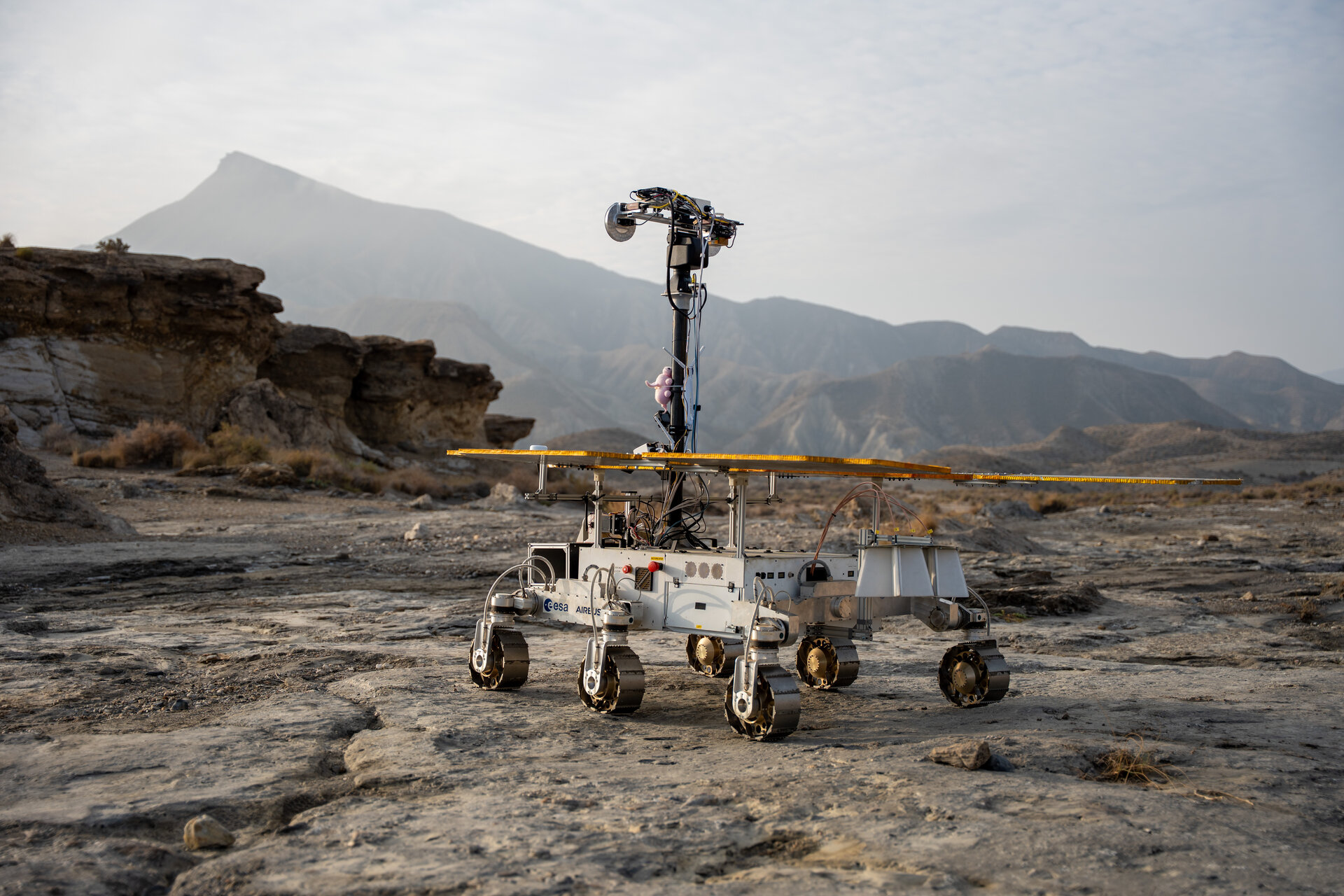
European scientists have put a Mars rover prototype through its paces in the rugged Tabernas desert in Spain, simulating the challenges of operating on the Red Planet. The eight-day exercise, involving a rover named Charlie and nearly 100 experts, was a crucial step in preparing for the Rosalind Franklin rover’s ambitious 2030 landing mission, designed to search for signs of ancient life.
Simulating the Red Planet’s Terrain
The Tabernas desert, renowned for its arid, Mars-like landscapes, served as the ultimate training ground for the ExoMars mission. Scientists and engineers orchestrated a series of complex operations, directing the Charlie prototype 220 meters across the terrain from a control center located 1200 kilometers away. This hands-on simulation allowed the team to refine navigation software, test exploration strategies, and optimize scientific data acquisition, mirroring the conditions Rosalind Franklin will face.
“While this setting is famous for Indiana Jones and spaghetti western movies, we came here because we could build a scenario using the local geology and mineralogy that was realistic enough to stress-test our science operations processes for interpretations and decision-making,” explained planetary scientist Elliot Sefton-Nash.
Remote Operations and Scientific Discovery
The heart of the operation was the Rover Operations Control Centre (ROCC) in Turin, Italy. Here, the science team relied on real-time data from Charlie—including images, subsurface radar, and spectral analysis—to identify promising locations for signs of life. The rover’s guidance, navigation, and control software performed exceptionally well, even undertaking autonomous journeys. Luc Joudrier, Rosalind Franklin rover operations lead, noted, “The rover worked like a charm. We even left Charlie to explore on its own, and on day six, it travelled more than 60 meters without any operator at the wheel with less than a 1% navigation error.”
The exercise highlighted the importance of seamless teamwork and adaptability. The team encountered unexpected challenges, such as accurately gauging slope steepness from rover data and dealing with interruptions from desert rain. These incidents provided valuable lessons in re-planning and reassigning priorities. “We also learned to re-plan and reassign priorities when faced with the unexpected,” added Chiara Lombardi, ExoMars rover and lander system engineer.
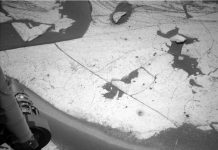
The simulated mission also involved processing data from prototype instruments, including cameras (PanCam, CLUPI), a spectrometer (Enfys), and the ground-penetrating radar (WISDOM), all vital for Rosalind Franklin’s quest for evidence of past microbial life.
Preparing for the 2030 Mission
This extensive field test is a critical component of the preparation for the 2030 Mars mission. The successful completion of this simulation builds confidence in the technology and the operational procedures. A subsequent field test in summer 2027 will introduce further complexities, including simulated communication with an orbiting spacecraft, bringing the team even closer to a real mission scenario.
“This field test was a huge success. We learned a lot that will help us improve for the next one and update our plans in a mission-like setting. When Rosalind Franklin rover lands on Mars in 2030, we want the team to feel like doing rover operations is as familiar as riding a bike,” concluded Elliot Sefton-Nash.