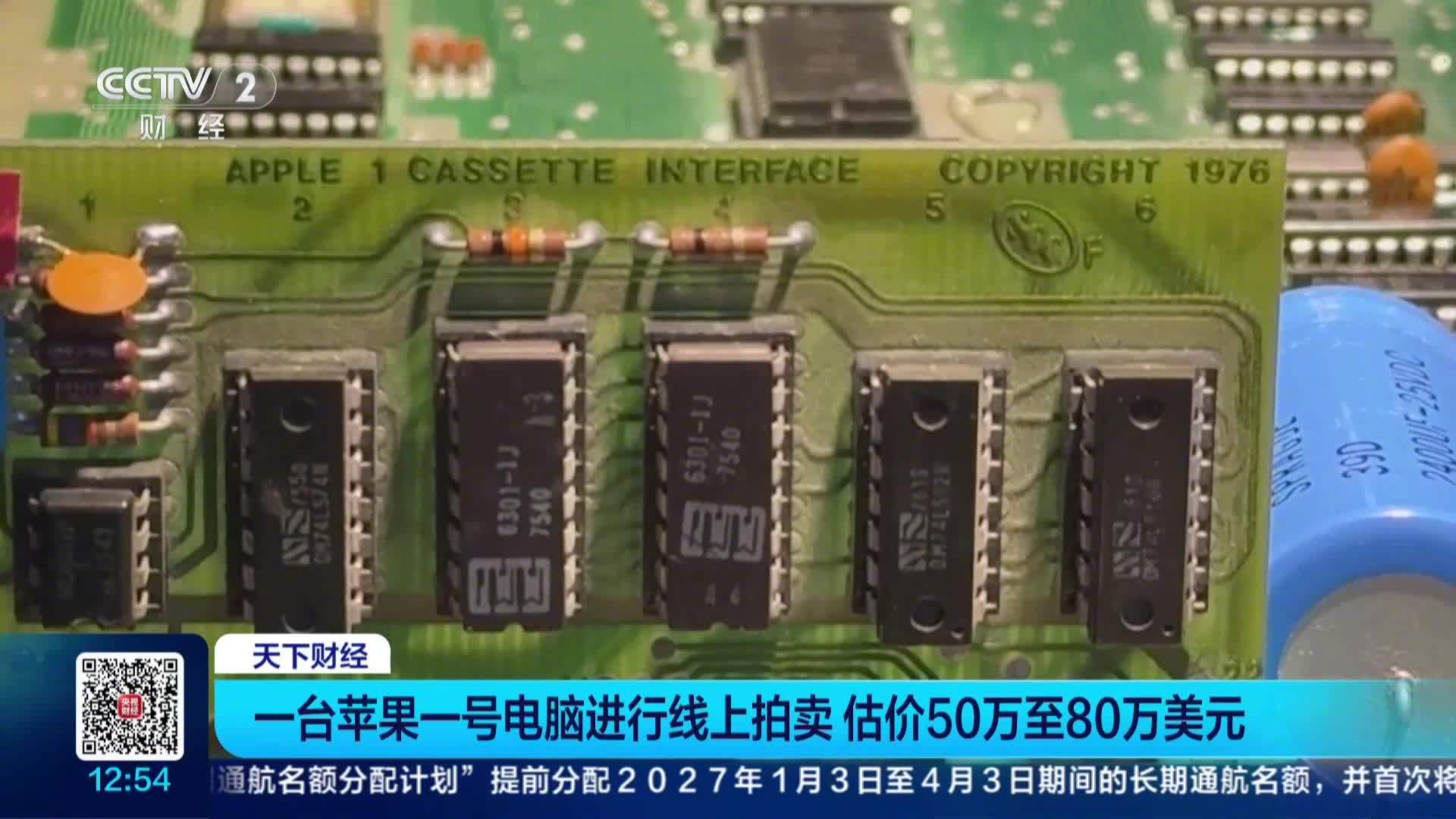
A rare piece of computing history is hitting the auction block, with a significant Apple I computer, complete with a signature from Apple co-founder Steve Wozniak, up for grabs. The online auction, hosted by Bonhams, is currently underway and will conclude on October 14th.
A Glimpse into Apple’s Origins
This particular Apple I computer, identified as having been purchased by its original owner in 1976, holds a special distinction. The circuit board bears the autograph of Steve Wozniak, one of the brilliant minds behind Apple’s inception. This adds a layer of historical gravitas to an already iconic machine.
The Apple I was Apple’s very first product, initially sold as a pre-assembled circuit board for $666. In today’s market, that’s roughly equivalent to $4,472. While it was a groundbreaking offering for its time, it required users to add their own case, power supply, keyboard, and display.
Rarity and Valuation
The rarity of the Apple I cannot be overstated. It is estimated that fewer than 75 of these machines still exist today, making any surviving unit a highly coveted item among collectors and enthusiasts. The current auction listing reflects this scarcity, with an estimated value ranging from $500,000 to $800,000.
The inclusion of Wozniak’s signature on the motherboard significantly enhances its appeal and, consequently, its potential auction price. Such items are not just technological artifacts; they are tangible links to the dawn of the personal computer revolution and the legendary figures who spearheaded it.
Bonhams, the auction house managing the sale, has confirmed the details of the machine and its provenance. The auction provides a unique opportunity for collectors to acquire a piece of Apple’s foundational legacy.
The Legacy of the Apple I
Launched in April 1976, the Apple I was the result of Steve Wozniak’s passion for electronics and Steve Jobs’s vision for bringing computing to the masses. Wozniak, a masterful engineer, designed and hand-built the initial batch of machines. Jobs, recognizing the potential, handled the marketing and sales, famously convincing The Byte Shop in Mountain View, California, to order 50 units.
The Apple I was a significant step forward from the hobbyist kits that were prevalent at the time. By offering a fully assembled circuit board, it lowered the barrier to entry for users who wanted a functional computer without extensive technical expertise. However, it still demanded a certain level of technical inclination, as users needed to supply peripheral components.
The success, albeit modest by today’s standards, of the Apple I paved the way for its successor, the Apple II, which became a runaway commercial success and is widely credited with popularizing the personal computer.
Collecting Vintage Tech
The market for vintage technology, especially items with significant historical ties like the Apple I, continues to be robust. These devices represent not only technological milestones but also cultural touchstones. Collectors often seek out items that are not only rare but also have a compelling story and provenance, like the presence of Wozniak’s signature.
As the auction progresses, the tech world will be watching closely to see if this iconic Apple I computer meets or exceeds its ambitious valuation, further cementing its place in the annals of computing history.