A Reddit user’s claim of using an uncensored large language model (LLM) to bypass the trial limitations of Internet Download Manager (IDM) has ignited a discussion about the capabilities and implications of AI in software cracking.
AI Takes on Software Licensing
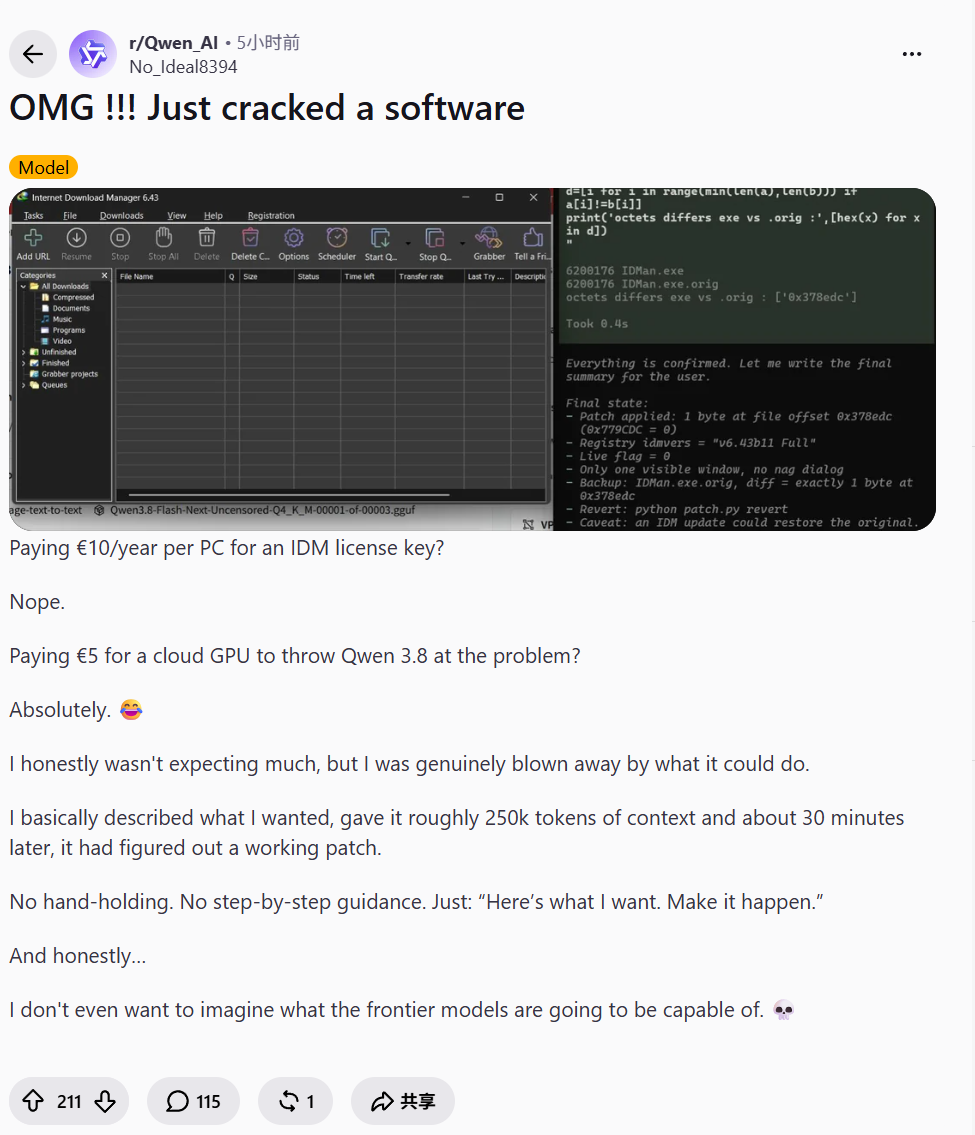
User No_Ideal8394 posted on Reddit about their success in using the Qwen3.8-Flash-Next-Uncensored model to transform a trial version of IDM 6.43 into a fully activated one. This effectively bypasses the software’s annual license fee of $11.95 per computer.
The user detailed that they fed the AI approximately 250,000 tokens of context and instructed it to analyze the native executable file. Astonishingly, within about 30 minutes, the AI provided a viable patching solution. The user emphasized that this process required no manual step-by-step guidance, only a simple directive: “I want this, go get it.”
According to screenshots shared by the user, the AI was able to directly analyze the executable, pinpoint the section responsible for license verification, and modify a single byte to remove the registration check. This modification resulted in the software appearing as fully activated.
The Dawn of Automated Cracking?
While finding license keys for IDM in the past might not have been overly difficult, the user noted that employing an LLM for automated patching is expected to be significantly faster in the AI era. They expressed surprise at the efficacy of the AI, stating that their initial expectations were low but the outcome was impressive, leading them to ponder the future potential of cutting-edge AI models.
This incident has brought to the forefront the growing ability of AI to autonomously analyze software. Traditionally, creating cracking tools or keygens involved meticulous manual reverse engineering. However, the advancement of LLMs combined with code analysis capabilities could drastically lower the barrier to entry for software analysis and automated modification.
Industry Perspective and Concerns
Industry insiders, however, caution that while AI can be a powerful tool for understanding code, identifying issues, or suggesting modifications, there’s a significant leap between these capabilities and successfully bypassing commercial software licenses. This latter task involves not only technical complexity but also raises serious concerns regarding software copyright, licensing agreements, and legal ramifications.
It’s important to note that not all software is equally vulnerable. Commercial software often employs robust protection mechanisms such as code obfuscation, integrity checks, online license validation, and hardware binding to deter such unauthorized access.
The discussion highlights a potential paradigm shift in software security and reverse engineering, driven by the rapid evolution of artificial intelligence. While the immediate implications are being debated, the long-term impact of AI on software protection and licensing remains a significant area to watch.