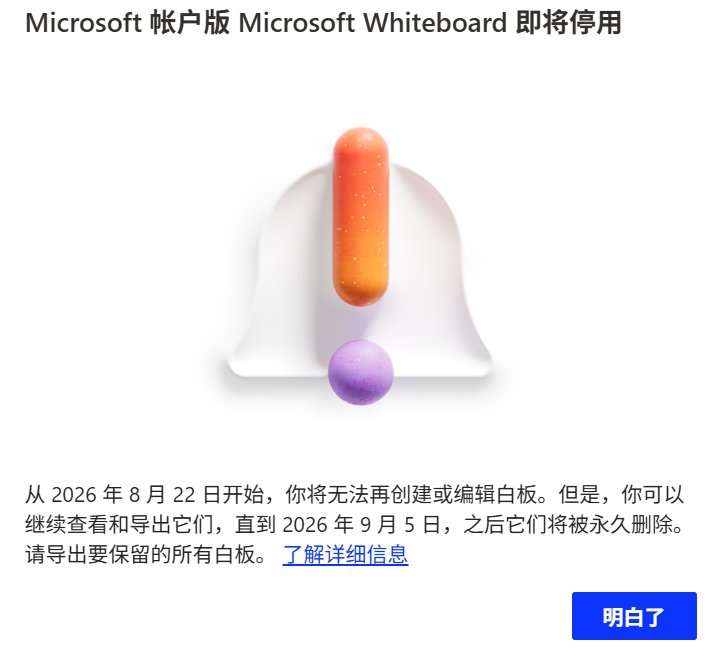
Microsoft has announced an extension to the decommissioning timeline for its Whiteboard application, providing users and IT administrators with additional time to transition their data. The popular collaborative tool’s shutdown and migration schedule has been pushed back across various user segments.
Extended Decommissioning Dates for Microsoft Whiteboard
Previously set to cease operations for individual users on August 22nd, the Microsoft Whiteboard service for personal accounts will now continue until September 25th. This extension grants users an extra month to adapt to the upcoming changes.
For users of the classic Whiteboard application, the final deletion date has also been postponed. The original plan to permanently remove the classic app and its associated data on September 5th has been shifted to October 16th. Microsoft emphasizes that any Whiteboard data not migrated or exported by this new date will be permanently lost and irretrievable.
The standalone Microsoft Whiteboard application, which had a deprecation date of September 14th, 2026, will now be supported until November 30th, 2026. This represents a significant extension of nearly 2.5 months, offering more flexibility for enterprise clients and heavy users of the application.
Transition to OneDrive-Based Whiteboard
Microsoft has been guiding users towards a new Whiteboard experience built on OneDrive. This strategic shift aims to integrate Whiteboard more seamlessly into the broader Microsoft 365 ecosystem, leveraging OneDrive’s robust cloud storage and collaboration features.
Enterprise customers are particularly urged to utilize the provided migration tools before their scheduled discontinuation. Failure to migrate or export data from the legacy Whiteboard versions before the new deadlines will result in permanent data loss. Microsoft has not provided specific reasons for the extension of these dates, but it is likely intended to ensure a smoother transition for all users, especially those managing large deployments or complex data sets.
This extended timeline should alleviate concerns for many who may have been struggling to meet the original deadlines, allowing for more thorough planning and execution of data migration strategies. Users are encouraged to visit Microsoft’s official channels for the latest updates and detailed migration guides.