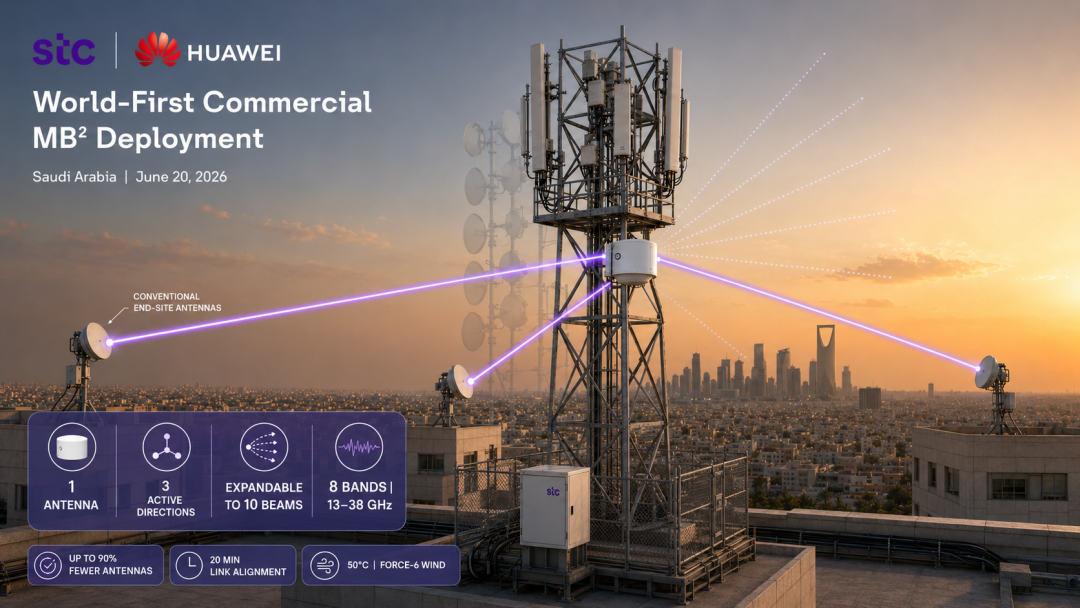
Huawei and Saudi telecom operator stc have achieved a significant milestone in wireless backhaul technology, announcing the world’s first commercial deployment of the Multi-Band Multi-Beam (MB²) microwave solution. The deployment took place in Riyadh, Saudi Arabia, on August 21st, marking a new era for microwave backhaul, characterized by multi-frequency and multi-directional capabilities.
Revolutionary Antenna Design
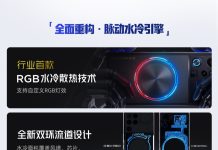
At the heart of the MB² solution lies a highly integrated antenna design. This innovative approach allows a single MB² antenna to simultaneously support eight microwave frequency bands: 13GHz, 15GHz, 18GHz, 23GHz, 26GHz, 28GHz, 32GHz, and 38GHz. Furthermore, it enables 10 concurrent beams, a substantial leap from traditional systems. This advanced design can reduce the number of antennas required by up to 90%, offering considerable advantages for network operators.
Cost and Deployment Efficiencies
The reduction in antenna count translates directly into significant cost savings and simplified deployments. Operators can save valuable tower space, reduce structural load requirements, and consequently lower tower rental fees. The installation and commissioning process is also streamlined, significantly cutting down on the workload and optimizing the Total Cost of Ownership (TCO).
For context, in microwave communication, ‘multi-frequency’ refers to a single antenna covering multiple frequency bands, allowing for flexible use of fragmented spectrum. ‘Multi-beam’ means a single antenna can transmit signals in multiple directions simultaneously, which is crucial for meeting the complex networking demands in densely populated urban areas.
Real-World Performance and Future-Proofing
During the commercial deployment with stc, Huawei and the operator successfully established microwave links across three directions on an existing live network. Following the initial link setup, the installation and commissioning of the second and third links were dramatically reduced from approximately 3 hours (using traditional methods) to just 20 minutes each. Looking ahead, this single site, without requiring any additional antenna equipment, can be expanded to support up to 10 transmission directions. This capability is vital for meeting the high-density site requirements of the 5G era.
Robustness in Challenging Conditions
The MB² solution has already proven its reliability in demanding real-world conditions. It demonstrated stable operation in the local network environment, enduring temperatures as high as 50℃ and wind speeds of level 6.
Deepening Strategic Partnership
This global first commercial rollout signifies a deepening of the long-standing strategic partnership between stc and Huawei. Both companies have expressed their commitment to leveraging cutting-edge technological solutions to drive network upgrades and advancements in the telecommunications sector.